


Introduction
Antioxidant, Anti-inflammatory, and Immunomodulatory Activities
Effects of Processing Conditions on Protein Conformation and Structural Integrity
Heat treatment
Enzymatic hydrolysis
Fermentation
Effects of storage conditions, pH variation, and environmental factors
Impact of Processing Strategies on the Enhancement of Anti-inflammatory Properties
Biological Significance of Processing-induced Modifications
Industrial Applications and Commercial Significance
Health-promoting Implications of Functional Milk Proteins
Limitations in Achieving Controlled Bioactivity Through Processing
Future Perspectives
Conclusion
Introduction
Milk proteins have attracted both scientific and industrial interest, not only as an essential source of nutrients for humans but also as precursors of various bioactive compounds, as evidenced by studies showing their role in health and disease prevention (Madureira et al. 2010). Major milk proteins including casein, whey proteins, lactoferrin, α-lactalbumin, and β-lactoglobulin have been reported to exert anti-inflammatory effects through multiple mechanisms, such as regulating immune cell activity, suppressing the expression of pro-inflammatory cytokines, promoting antioxidant responses, and modulating the gut microbial environment (Auestad and Layman 2021, Kashung and Karuthapandian 2025). Major components such as casein, whey proteins, and lactoferrin have been reported to possess functional properties beyond serving merely as sources of amino acids. For instance, casein has been studied for its immunomodulatory effects, while whey proteins are known for their antioxidant and antimicrobial activities (Borges et al. 2025, Saubenova et al. 2024). In particular, as the functionality of foods has recently emerged as an important factor influencing consumer choice, extensive research on the functional value of milk proteins has been conducted worldwide, revealing their potential in enhancing health and wellness (Gulseven and Wohlgenant 2014). These physiological functions are involved not only in the prevention of inflammatory responses but also in the attenuation of existing inflammation, suggesting strong potential for managing various chronic disorders, including arthritis, metabolic syndrome, cardiovascular diseases, and neurodegenerative conditions (Koirala et al. 2023).
Chronic inflammation, a pervasive pathological mechanism, is increasingly recognized as a key factor in numerous modern diseases (Yacine et al. 2025). Chronic diseases such as arthritis, metabolic syndrome, cardiovascular disorders, and neurodegenerative diseases are associated with excessive activation of inflammatory responses, which has emerged as a major challenge for extending healthy lifespan in aging societies (Santos and Fonseca 2009, Rea et al. 2018). Conventional pharmacological therapies often lead to adverse side effects such as gastrointestinal issues and increased risk of chronic diseases, making them challenging for long-term use and highlighting the need for functional foods to modulate inflammation through daily diet (Luvián-Morales et al. 2022). In this context, the anti-inflammatory effects of milk proteins are significant because they offer a dietary approach to managing inflammation. These proteins may inhibit pro-inflammatory cytokines and modulate immune responses, warranting further research into their mechanisms and benefits (Jiang et al. 2025).
The anti-inflammatory activity of milk proteins is exerted through mechanisms such as the suppression of cytokine secretion, modulation of immune cell activity, and improvement of the gut environment, as evidenced by studies showing specific protein interactions with immune pathways (Zhang et al. 2025). However, the functional properties of proteins depend not only on their intrinsic molecular structures but also on structural modifications during processing, which can alter their bioactivity and efficacy (van Lieshout et al. 2020). Heat treatment can induce protein denaturation and expose bioactive peptides, which can have positive or negative effects on functionality. In contrast, fermentation may generate novel anti-inflammatory peptides through proteolytic enzymes secreted by lactic acid bacteria (Leite et al. 2023, Vadher et al. 2025). Enzymatic hydrolysis can be employed to deliberately produce specific bioactive peptides. Additionally, storage conditions and pH fluctuations may alter the stability and activity of proteins (Ranvir et al. 2025). Thus, even the same milk protein may exhibit different anti-inflammatory activities depending on the processing conditions it undergoes.
Therefore, when evaluating the anti-inflammatory effects of milk proteins, it is essential to consider their inherent biological properties and the impact of specific processing and treatment conditions, such as pasteurization and fermentation, on their functionality. Several studies have reported that pasteurization and ultra-high temperature (UHT) sterilization result in different anti-inflammatory outcomes. Additionally, fermentation or enzymatic hydrolysis can generate novel bioactivities that are absent in native proteins (Brick et al. 2017). However, the consistency of findings remains limited due to variations in the type of protein, processing conditions, and analytical methods across studies. Additionally, discrepancies are observed between in vitro and in vivo investigations. Moreover, most studies have been confined to cellular or animal models, highlighting a significant gap in clinical evidence in humans, which limits the applicability of these findings to real-world scenarios (Mohammadi et al. 2025). This review aims to provide a systematic overview of the anti-inflammatory properties of milk proteins, focusing on how processing techniques like heat treatment and fermentation modulate their characteristics. Through this approach, the review aims to critically evaluate existing evidence, highlight common findings and discrepancies, and suggest specific areas for future research. Furthermore, these discussions could guide the creation of new functional dairy products and expand their applications in health-focused markets.
Antioxidant, Anti-inflammatory, and Immunomodulatory Activities
Milk proteins are increasingly recognized not only as sources of essential amino acids but also as bioregulatory molecules with bioactive functions such as immune modulation and antioxidant activity (Auestad and Layman 2021). In recent years, chronic inflammation has been identified as a fundamental pathological mechanism, contributing to insulin resistance in metabolic disorders, atherosclerosis in cardiovascular diseases, and neuronal damage in neurodegenerative conditions. Consequently, increasing research efforts have focused on dietary approaches, such as the inclusion of omega-3 fatty acids and polyphenols, aimed at alleviating inflammation and maintaining immune homeostasis (Fukuda and Sata 2021). Against this background, the anti-inflammatory activity of milk proteins has attracted considerable attention for its potential to reduce inflammation-related symptoms and its implications in developing functional foods like fortified yogurts and supplements aimed at promoting human health.
Milk proteins, which play a crucial role in nutrition and health, are broadly classified into two major groups: caseins and whey proteins. These two protein fractions exhibit distinct structural and chemical properties, which influence their respective anti-inflammatory mechanisms. Casein accounts for approximately 80% of the total protein content in milk and exists as micellar structures, which are spherical aggregates that confer enhanced stability and functional properties. In contrast, whey proteins exist in a soluble form and mainly consist of β-lactoglobulin, α-lactalbumin, lactoferrin, and immunoglobulins, each contributing uniquely to immune function and nutrient transport (Dalgleish and Corredig 2012).
According to multiple studies, there is accumulating evidence that casein-derived bioactive peptides can modulate inflammatory responses in macrophages. For instance, peptides derived from casein glycomacropeptide (GMP) have been reported to suppress the NF-κB signaling pathway in RAW264.7 cells, thereby reducing the expression of pro-inflammatory cytokines such as TNF-α and IL-1β (Cheng et al. 2015). Additionally, fragments originating from κ-casein have been shown to induce an M2-like macrophage phenotype, promoting anti-inflammatory regulation (Lalor and O'Neill 2019). Recently, novel immunomodulatory peptides, such as PFPEVFG, have been identified from hydrolysed casein. These findings underscore the potential of casein-derived peptides in inflammatory modulation, a promising area that could significantly impact therapeutic approaches (Li et al. 2024).
Whey proteins are recognized as multifunctional components due to their bioactive peptides, which contribute to anti-inflammatory, antioxidant, immunomodulatory, and muscle metabolism–promoting properties. Among them, lactoferrin is considered the most representative anti-inflammatory protein within the whey protein fraction, due to its ability to bind iron and inhibit bacterial growth, which are key factors in reducing inflammation (Borges et al. 2025) Lactoferrin not only inhibits the growth of pathogenic microorganisms by binding to iron ions (Fe³⁺), but also modulates the responses of host immune cells (Kim et al. 2025). During inflammatory conditions, it suppresses the excessive production of cytokines such as TNF-α, IL-6, and IL-8, while promoting the secretion of the anti-inflammatory cytokine IL-10, thereby contributing to the homeostatic modulation of inflammation (Yami et al. 2023).
The anti-inflammatory activity of milk proteins involves specific mechanisms such as the modulation of cytokine production and inhibition of inflammatory pathways. These synergistic actions highlight the potential of milk proteins as bioactive components. They not only serve as nutritional sources but also contribute to immune homeostasis and the prevention of inflammatory diseases. Future studies should focus on elucidating the structure-activity relationships of casein and whey proteins. Additionally, research should investigate how processing conditions influence their functional properties at a molecular level.
Effects of Processing Conditions on Protein Conformation and Structural Integrity
The functional properties of milk proteins are primarily determined by their intrinsic amino acid sequences and tertiary structures, which dictate their folding patterns and interactions. However, during food manufacturing and storage, external factors like heat, enzymes, microorganisms, pH, and oxygen continuously modify these structures, altering their functional properties. Such structural alterations directly affect the physicochemical stability, digestibility, solubility, and biological activities of the proteins by changing their molecular interactions and conformations. In essence, proteins are dynamic, environmentally responsive biopolymers whose functions can be enhanced or diminished by the physical and chemical stimuli they encounter during processing (van Lieshout et al. 2020). The anti-inflammatory activity of milk proteins can vary significantly depending on intrinsic structural properties, such as amino acid composition, and on physical and chemical changes during processing, like denaturation or aggregation. Recent studies have reported that processing conditions such as heat treatment, enzymatic hydrolysis, and fermentation can influence anti-inflammatory activity by altering the structure of bioactive peptides, such as increasing peptide solubility or changing peptide sequences (Borges et al. 2025, Siddiqui et al. 2024) (Table 1). These post-processing alterations do not merely maintain or diminish protein functionality but can also serve as an opportunity to generate novel anti-inflammatory properties. Therefore, the design of processing conditions should extend beyond the goals of hygiene and preservation to serve as a scientific approach for optimizing protein functionality.
Table 1.
Summary of functional shifts during processing
Heat treatment
Heat treatment is the most widely applied protein processing technology in the food industry. Representative methods include low-temperature long-time pasteurization (LTLT, 63°C for 30 min), high-temperature short-time pasteurization (HTST, 72°C for 15 s), and UHT sterilization (135–150°C for few seconds) (Freire et al. 2022) (Table 2). Heat treatment is an essential process to ensure the hygienic safety and storage stability of milk proteins; however, it also induces alterations in their secondary and tertiary structures, thereby influencing their functional properties (Čurlej et al. 2022). In low-temperature pasteurization (approximately 63–65°C for 30 minutes), the structural integrity of proteins is relatively well preserved, allowing bioactive peptides to remain stable. In contrast, UHT sterilization (135–150°C for a few seconds) causes rapid thermal denaturation, leading to the disruption of hydrogen and disulfide bonds and the formation of new structural conformations (Qi et al. 2015). In addition, heat treatment conditions can influence the digestibility of milk proteins, thereby affecting the efficiency of peptide release in the gastrointestinal tract. When proteins undergo moderate denaturation through controlled heating, their structural accessibility to digestive enzymes increases, leading to enhanced production of bioactive peptides that may contribute to improved anti-inflammatory activity (Bunsroem et al. 2022). In this context, recent industrial practices have shifted from relying solely on conventional high-temperature sterilization to adopting alternative technologies such as LTLT treatment and high-pressure processing (HPP). These approaches aim to minimize protein denaturation while preserving or enhancing the anti-inflammatory functionality of dairy proteins (Siddiqui et al. 2024).
Table 2.
Common heat treatment methods used in modern dairy processing
However, excessive heat treatment can lead to the denaturation and loss of solubility of milk proteins, impairing their functional properties. High temperatures and prolonged exposure cause irreversible protein aggregation. They also promote Maillard reaction (MR), which modifies lysine residues and inhibits the formation of bioactive peptides. Several studies have reported that the anti-inflammatory activity of β-lactoglobulin decreases by more than 40% following UHT processing at temperatures above 150°C. Therefore, heat treatment functions as a double-edged sword, where precise control of processing parameters such as time, temperature, and pH plays a crucial role in maintaining the anti-inflammatory functionality of milk proteins (Sykora et al. 2026).
Enzymatic hydrolysis
Enzymatic hydrolysis is a process that deliberately cleaves peptide bonds in proteins to produce peptides with specific bioactivities, and it has recently attracted significant attention in the field of functional protein research (Meleti et al. 2025). Commonly used enzymes include trypsin, chymotrypsin, papain, and alcalase, and the resulting peptide length and functionality vary depending on the type, concentration, reaction time, and pH of the enzyme employed (Wróblewska et al. 2004). Milk proteins possess inherent bioactivities; however, when they undergo enzymatic hydrolysis or fermentation, they are broken down into short-chain bioactive peptides that can exert newly enhanced functional properties. Enzymatic hydrolysis employs various proteolytic enzymes such as papain, alcalase, pepsin, and trypsin to selectively cleave protein structures, thereby enhancing anti-inflammatory, antioxidant, and immunomodulatory effects (Kashung and Karuthapandian 2025). Enzymatic hydrolysis can add specific bioactivity to proteins that do not naturally have. By precisely controlling processing parameters, it is possible to customize peptide production to yield specific biological functions. This approach represents a promising strategy not only for developing anti-inflammatory functional dairy products but also for advancing personalized functional foods aimed at targeted health benefits.
Fermentation
Fermentation is a process that utilizes enzymes secreted by microorganisms to naturally degrade proteins, thereby inducing structural modifications under mild conditions, unlike heat treatment. Lactic acid bacteria such as Lactobacillus, Bifidobacterium, and Streptococcus thermophilus secrete proteases and peptidases that hydrolyze casein and whey proteins. During this process, a wide range of bioactive peptides with potential physiological functions are generated (Cui et al. 2022). During fermentation, proteolytic enzymes secreted by lactic acid bacteria (such as Lactobacillus and Bifidobacterium) contribute to the natural generation of anti-inflammatory peptides (Helal et al. 2023). Notably, fermentation is regarded as an eco-friendly processing method capable of generating natural bioactive compounds without inducing the extensive structural alterations typically associated with high-temperature treatments (Gao et al. 2025). Fermentation induces protein denaturation more mildly than heat treatment. Additionally, the metabolic byproducts of microorganisms provide antioxidant and immunomodulatory effects, which synergistically enhance the overall bioactivity.
Effects of storage conditions, pH variation, and environmental factors
The structural stability of milk proteins is influenced by environmental factors such as storage temperature, pH, and exposure to light. During prolonged storage, oxidative modifications or Maillard-type glycation reactions may occur, potentially impairing or altering the activity of anti-inflammatory peptides (Norwood et al. 2016). During the post-processing storage phase, both the structural stability and functional properties of milk proteins continue to evolve. Elevated storage temperatures or prolonged storage periods accelerate protein oxidation and aggregation, which may consequently lead to a reduction in anti-inflammatory activity. The MR is a non-enzymatic browning reaction that occurs between reducing sugars and amino group–containing molecules and is commonly observed during food processing and preparation. MR–induced browning and structural deterioration have been shown to impair the bioactivity of functional peptides (Milkovska-Stamenova and Hoffmann 2017). Conversely, pH control can help preserve protein conformation and improve peptide solubility, thereby maintaining biofunctional properties. For example, lactoferrin exhibits its highest stability within the pH range of 6.0–7.0, under which both its anti-inflammatory activity and iron-binding capacity remain intact (Sreedhara et al. 2010). The anti-inflammatory functionality of milk proteins varies significantly based on specific processing conditions, such as heat treatment, enzymatic hydrolysis, and fermentation. Heat treatment may enhance the anti-inflammatory functionality of milk proteins by exposing bioactive sites through denaturation, although excessive thermal stress can lead to a loss of this bioactivity. In contrast, enzymatic hydrolysis and fermentation enhance anti-inflammatory activity by breaking down proteins into novel bioactive peptides under mild conditions, which may increase their bioavailability and efficacy. Therefore, it is crucial to view food processing as a scientific tool that modulates the structural and physiological properties of proteins, thereby optimizing their anti-inflammatory functionality, rather than merely serving as a hygienic or preservation step.
Impact of Processing Strategies on the Enhancement of Anti-inflammatory Properties
An extensive evaluation of the literature on the anti-inflammatory properties of milk proteins indicates a clear and consistent pattern, whereby enzymatic hydrolysis and fermentation exert the most pronounced enhancement of anti-inflammatory activity among processing methods (Meleti et al. 2025) (Table 3). Moreover, both enzymatic hydrolysis and fermentation enhance anti- inflammatory activity and frequently impart additional biofunctional properties, such as antioxidant, antihypertensive, immunomodulatory, and gut microbiota–improving effects. Thus, these processes serve not merely as activity-enhancing methods but as platforms for a wide range of functional enhancements (Borges et al. 2025). Fermentation holds substantial industrial value because the composition of generated peptides can vary based on microbial strains, culture conditions, and fermentation duration. This variability allows for controlled modulation of functionality through precise process optimization (Solieri et al. 2022).
Table 3.
Microbial strains and enzymes used in milk processing and quantitative changes in bioactivity
In contrast, thermal processing, particularly high-temperature short-time treatment has been reported in several studies to decrease anti-inflammatory activity, which is significant because it impacts the nutritional and therapeutic value of processed food. This reduction is primarily attributed to excessive protein denaturation, which leads to structural aggregation, damage to amino acid residues, and the degradation of heat-sensitive bioactive components, ultimately diminishing the food's nutritional quality (Zhang et al. 2021). Furthermore, excessive heat treatment promotes the formation of MR products, some of which have been suggested to exert pro-inflammatory effects. This indicates that the impact of high-temperature processing extends beyond mere functional reduction, involving more complex biochemical alterations (Joubran et al. 2017).
When summarized, the most critical conclusions drawn from existing studies are as follows. First, enzymatic hydrolysis and fermentation consistently enhance anti-inflammatory activity due to the generation of functional peptides (Bamdad et al. 2017). In contrast, UHT processing is more likely to reduce anti-inflammatory functionality, primarily due to protein denaturation and nutrient degradation (Xiao et al. 2025). Finally, low- temperature pasteurization is advantageous for maintaining structural stability, and most improvements in anti-inflammatory activity occur during subsequent processes such as hydrolysis and fermentation rather than during the heat treatment itself (Qi et al. 2015). The functionality of milk proteins is influenced not just by their intrinsic properties, but also by processing-induced structural changes and their interaction with new bioactive peptides. This highlights the crucial role of processing design in creating functional dairy products, impacting both academic research and industrial applications, such as improving nutritional value and product stability.
Biological Significance of Processing-induced Modifications
Traditionally, dairy processing has been designed with primary goals such as preserving nutritional value, ensuring microbial safety, and improving shelf stability. However, with the growing consumer demand for functional foods, the focus has shifted from merely maintaining quality and safety to actively enhancing biofunctional properties (Augustin and Udabage 2007) (Fig. 1). Studies on the anti-inflammatory potential of milk proteins are crucial in transforming the current processing paradigm from a passive, preservation-focused approach to a proactive strategy that enhances functionality. This signifies a meaningful transition in dairy science and technology, viewing processing not only as a method of protection but also as a tool for value creation through functionality enhancement.
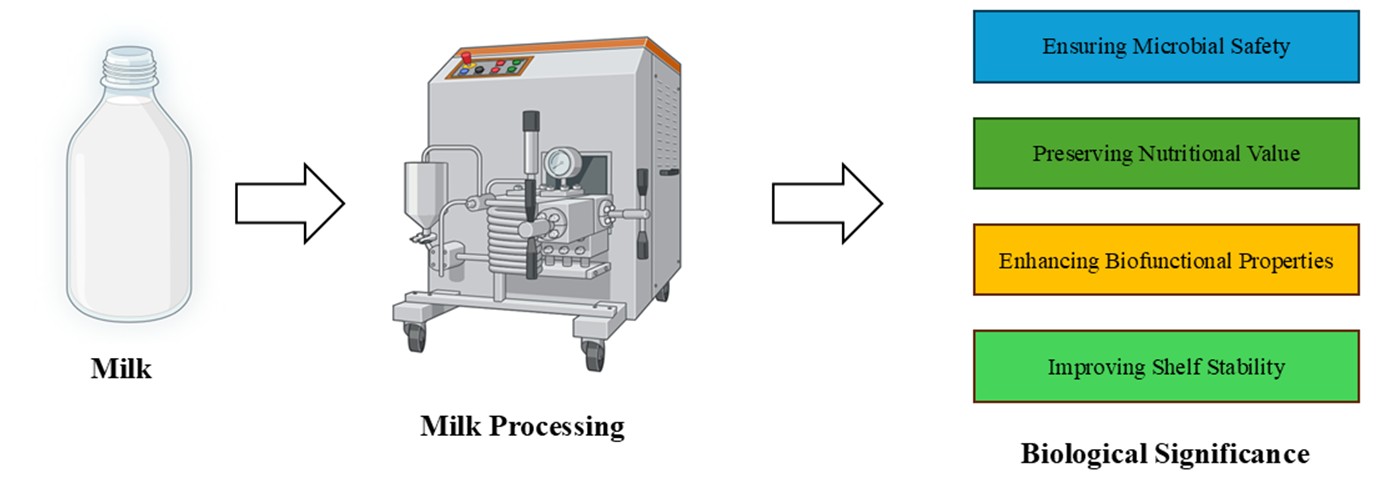
A particularly significant aspect is that milk proteins are highly sensitive to processing conditions, and each stage such as heat treatment, enzymatic hydrolysis, fermentation, and storage induces distinct structural modifications or generates different bioactive peptides (Meleti et al. 2025, Kopf-Bolanz et al. 2014). Even slight variations in process parameters can therefore lead to substantial differences in the final product’s physiological functionality. This suggests that dairy processing can be intentionally designed not only to preserve nutritional quality and sensory attributes, but also to actively confer health-promoting properties.
From an industrial perspective, this holds considerable significance. The global functional food market is rapidly expanding, and consumer preferences are shifting away from conventional dairy products that merely provide basic nutrients such as calcium and protein, toward products offering targeted health benefits such as immune support, gut health improvement, and anti-inflammatory functionality (Jena and Choudhury 2025). Research on the anti-inflammatory potential of milk proteins aligns closely with this trend, as it introduces new opportunities for product innovation. The development of such functional dairy products not only provides a means of differentiation and strengthened market competitiveness but also aligns well with the growing demand for chronic disease management in aging societies. Elderly populations are particularly susceptible to chronic conditions such as systemic inflammation, sarcopenia, and joint-related disorders, making the anti-inflammatory benefits obtained through regular dietary intake highly valuable (Nieman et al. 2021).
Industrial Applications and Commercial Significance
Milk proteins offer a notable advantage in terms of industrial applicability due to their relatively stable supply chain and the already well-established dairy processing infrastructure. While many other functional ingredients face challenges such as high production costs or complex processing requirements, milk protein–based functional products can be commercialized more efficiently by leveraging existing facilities and distribution systems. In particular, enzymatic hydrolysis and fermentation are already widely implemented in the dairy industry, making the optimization of processing conditions for anti-inflammatory peptide production not only feasible but also a highly realistic technological objective (Park and Nam 2015).
Moreover, research on the anti-inflammatory activity of milk proteins holds substantial academic significance. Although functional studies on dietary proteins have long been conducted, a comprehensive understanding of how processing conditions alter their biological activity is still not fully established. In particular, the mechanisms related to protein denaturation, peptide generation, changes in bioavailability, and interactions with the gut microbiota constitute a complex multi-factorial system that requires systematic investigation. Advancing knowledge in these areas would make an important scholarly contribution to the future development of food science (Horner et al. 2016, Buatig et al. 2025).
Research on the anti-inflammatory activity of milk proteins is significant for designing processing conditions for functionality-oriented dairy production, scaling functional dairy products industrially, exploring personalized functional foods, and advancing academic research on food protein functionality. These implications extend beyond basic scientific inquiry, impacting the food industry by guiding product development, enhancing public health through improved nutrition, and benefiting consumer well-being with more personalized food options. Consequently, this research is expected to lay the groundwork for developing scientifically validated functional dairy products that meet industry standards and consumer needs.
Health-promoting Implications of Functional Milk Proteins
While the dairy industry has traditionally focused on its role as a provider of nutritional value, the modern food market is rapidly shifting toward functional products that emphasize health promotion, disease prevention, and overall wellness (Elkot 2022). Within this transition, milk proteins are gaining significant attention as key bioactive ingredients with anti-inflammatory, antioxidant, and immunomodulatory properties (Kashung and Karuthapandian 2025, Park and Nam 2015). (Fig. 2).
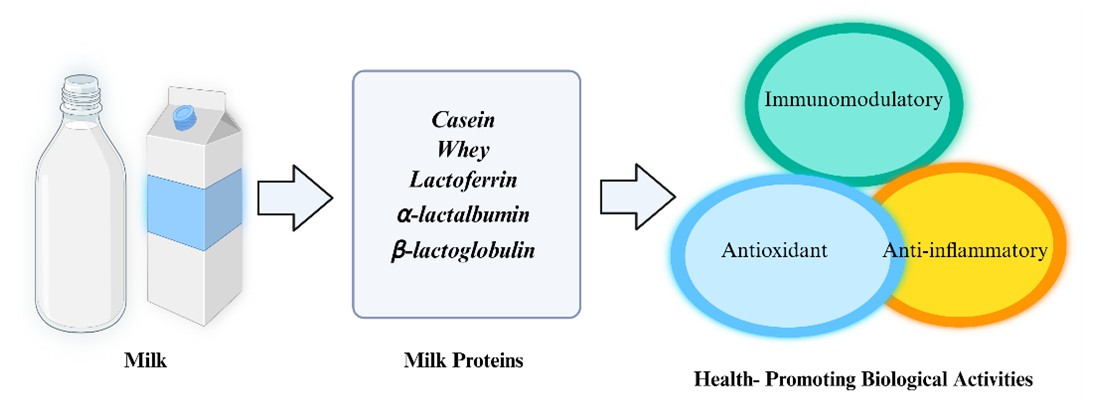
Maximizing the functional potential of milk proteins requires moving beyond conventional processing strategies that focus solely on nutritional stability, toward approaches that optimize processing conditions based on the relationship between structural modification and bioactive functionality. In dairy processing, multiple factors including heat treatment, high-pressure processing, fermentation, enzymatic hydrolysis, membrane filtration, and storage conditions interact in a complex manner to modify the structural stability and functional properties of proteins (van Lieshout et al. 2020, Bhat et al. 2021). However, excessive heat processing may decrease peptide yield and induce structural damage, ultimately diminishing the functional efficacy of the protein. Fermentation conditions are no longer limited to the traditional role of inhibiting pathogenic microorganisms but are increasingly employed as a strategic means to enhance functional properties.
Certain probiotic strains, such as Lactobacillus and Bifidobacterium, hydrolyze milk proteins to generate bioactive peptides exhibiting anti-inflammatory and immunomodulatory effects. Therefore, the industrial focus should shift from the question of which processing method to apply to how to design processing conditions to achieve targeted functionalities. Another noteworthy trend is the shift in the health food market from traditional low-fat dairy products toward high-functional protein-based dairy products. Particularly among the MZ generation, there is a growing consumer preference for nutrition–function integrated protein products, accompanied by expectations for scientifically substantiated functionality rather than generalized claims such as milk is good for health. Instead, consumers increasingly seek products supported by specific scientific evidence, for instance, this milk contains anti-inflammatory peptides that may help reduce skin inflammation (Keogh et al. 2019). Accordingly, the dairy industry should strategically orient functional product development around three core principles: evidence-based nutrition, specific health claims tailored to targeted physiological outcomes, and sustainability.
The functionality of milk proteins should not be considered merely preserved, but rather managed, engineered, and strategically optimized. To achieve this, three core strategies must be pursued in a balanced manner: technological optimization of processing conditions, functionality-driven product design, and industrial value enhancement (van Lieshout et al. 2020, Murtaza et al. 2022). Additionally, establishing a collaborative model that clearly defines the roles of academia, industry, and consumers is essential. Future research should not only verify that processing alters functionality but also explore specific processing conditions that maximize anti-inflammatory effects. Ultimately, this paradigm will lay the groundwork for the dairy industry to expand into protein-based therapeutic and health-functional foods. It positions milk proteins as high-value bioactive materials, transcending traditional nutritional roles to enable the intentional design of targeted functionality.
Limitations in Achieving Controlled Bioactivity Through Processing
Although accumulated research on the anti-inflammatory properties of milk proteins has yielded findings such as reduced inflammation markers, several limitations hinder the translation of these results into functional food development or human application. The most significant constraint is that most of existing studies remain at the cellular (in vitro) or animal model (in vivo) level, which limits the understanding of how these proteins function in the complex human physiological environment. While these models are valuable for elucidating basic mechanisms and assessing potential bioactivity, they fall short because they cannot fully replicate the complex physiological conditions of the human body.
In particular, milk proteins are hydrolysed into peptides of various molecular sizes during gastrointestinal digestion, and these degradation patterns can vary significantly depending on individual physiological differences, feeding status, or gut microbiota composition (Tagliamonte et al. 2023). Consequently, it is difficult to guarantee that bioactive peptides identified under specific experimental conditions will be generated in the same form within the human body.
The second limitation is the substantial difficulty in standardizing specific processing parameters such as heat treatment and enzyme type. The anti-inflammatory activity of milk proteins depends on structural modifications and peptide generation. These processes are influenced by variables such as heat treatment temperature, duration, enzyme type, fermentation microorganisms, pH, and storage conditions (Meleti et al. 2025). These variations in processing conditions pose a significant barrier to directly comparing research outcomes or conducting meta-analyses (Auestad and Layman 2021). Ultimately, the lack of standardized conditions across studies complicates the interpretation of results and hinders the development of clear, applicable conclusions for industrial implementation.
Another critical limitation is the gap between laboratory conditions and industrial processing environments. While laboratory experiments allow precise control of parameters such as pH, temperature, and enzyme concentration, replicating these conditions in large-scale production is challenging due to constraints related to cost, production efficiency, product stability, microbial safety, and equipment design (Du et al. 2022). Moreover, the intrinsic quality of raw milk in industrial processes can vary depending on factors such as season, feed composition, and cattle breed, making it difficult to consistently obtain identical peptide profiles even when the same processing conditions are applied (Kostovska et al. 2024).
Furthermore, a significant limitation lies in the fact that many studies are conducted using isolated or purified proteins. In real food systems, various components such as lipids, lactose, and minerals coexist, and these constituents can influence digestive dynamics or protein denaturation behavior (Buatig et al. 2025, Everett 2025). Therefore, it is difficult to assert that the findings derived from isolated protein studies will be directly applicable to finished products such as milk, yogurt, or cheese. This discrepancy between the experimental materials and the actual consumer products represents a structural limitation in research on the anti-inflammatory potential of milk proteins. Although current research on the anti-inflammatory activity of milk proteins demonstrates strong functional potential, several critical limitations such as the lack of clinical validation with specific patient groups, challenges in standardizing processing conditions across different dairy products, the gap between laboratory and industrial settings in terms of scale and equipment, and inconsistencies in evaluation methodologies like varying assay techniques continue to hinder its translation into real-world applications. Addressing these constraints is essential for transforming experimental findings into tangible health benefits. This requires targeted clinical trials, the development of standardized processing protocols, and the creation of consistent evaluation methodologies to establish a reliable and reproducible foundation for the development of functional dairy products in the industry.
Future Perspectives
The anti-inflammatory potential of milk proteins has been increasingly validated through a range of in vitro and in vivo studies, particularly as specific bioactive peptides have been identified to inhibit inflammatory cytokine expression, regulate macrophage activation, and suppress the NF-κB signaling pathway (Marcone et al. 2015). These findings strengthen the position of milk proteins as promising functional food ingredients with therapeutic potential. However, to ensure that this potential expands beyond theoretical evidence into tangible industrial, medical, and nutritional applications, strategic and systematic future research directions must be established. In particular, to enhance the scientific reliability of functional validation and accelerate practical utilization, it is essential to focus on three key pillars: (i) expansion of clinical research (Meleti et al. 2025, Duffuler et al. 2022), (ii) elucidation of molecular-level mechanisms (Nielsen et al. 2024), and (iii) establishment of an industrial application framework (Agyei and Danquah 2011).
First, to substantiate the functional efficacy of anti-inflammatory peptides, it is imperative to expand current research beyond cellular and animal studies to human-based clinical trials. While these models are valuable for demonstrating potential functionality, they do not sufficiently guarantee clinical effectiveness in humans. Although milk-derived peptides possess relatively low molecular weight, without a clear understanding of their behavior in the human body particularly regarding digestion, absorption, bioavailability, and metabolic pathways their application as functional ingredients in commercial products remains limited (Horner et al. 2016, Biondi et al. 2024). Therefore, future studies must be designed to provide evidence-based insight into where in the human body these bioactive peptides exert their effects and through which mechanisms their anti-inflammatory actions are mediated.
And then, to translate the functionality of milk proteins into tangible industrial value, the development of application-oriented technologies must progress in parallel with mechanistic research. Current dairy processing systems are predominantly designed with a focus on nutritional stability, shelf-life, and sensory quality, and therefore lack strategic considerations for preserving or enhancing bioactivity. Accordingly, one of the key future tasks is to establish manufacturing processes that are both industrially feasible and capable of maintaining or amplifying functional properties (Murtaza et al. 2022). Moreover, successful commercialization of such products requires consideration not only of technological aspects but also consumer acceptance, labeling regulations, and functional certification systems (e.g., health functional food approval, GRAS status). In other words, the establishment of an integrated industrial ecosystem encompassing functional material development, process design, product commercialization, regulatory certification, and consumer education is essential for realizing the industrial potential of milk protein-based functional foods (Ankiel et al. 2025).
Ultimately, research on the anti-inflammatory activity of milk proteins holds potential to transcend academic exploration and evolve into applications across the medical, nutritional, and healthcare industries. To achieve this, the research focus must move beyond confirming the mere presence of functional activity and advance toward addressing more specific and mechanistic questions, namely, which peptides, through which molecular pathways, for which disease targets, and under which conditions demonstrate the highest efficacy. When such mechanistic understanding is successfully linked with industrial applicability, milk proteins can extend beyond their role as conventional food ingredients and emerge as high value biofunctional materials capable of driving the future wellness and healthcare industries.
Conclusion
Milk proteins hold significant academic and industrial value, not merely as nutritional components but also as bioactive substances capable of directly modulating the human inflammatory response. However, the anti-inflammatory activity of milk proteins is not solely determined by their intrinsic structural properties but is also substantially influenced by physicochemical modifications introduced during processing. Various processing parameters such as heat treatment, enzymatic hydrolysis, fermentation, storage conditions, and pH changes can alter the structural stability of proteins, thereby affecting the generation and bioavailability of bioactive peptides (van Lieshout et al. 2020, Li et al. 2021). This indicates that processing can either enhance or diminish anti-inflammatory functionality, depending on how it modifies protein structures. For instance, high-temperature heat treatment may increase enzymatic accessibility and promote the exposure of anti-inflammatory peptide sequences, yet excessive thermal denaturation can lead to the destruction of functional amino acid residues and loss of nutritional value, ultimately reducing anti-inflammatory potential (Li et al. 2021, Leite et al. 2023). Therefore, the relationship between protein functionality and processing conditions should be understood as a complex, dynamic interaction rather than a unidirectional effect.
Meanwhile, it has been demonstrated that targeted hydrolysis using specific proteolytic enzymes enables the intentional production of low-molecular-weight peptides with high anti-inflammatory potential, thereby providing a strategic approach for the development of functional dairy products. These findings suggest that the anti-inflammatory activity of milk proteins is not fixed but can be modulated and enhanced through processing conditions, highlighting its nature as a controllable bioactive functionality. These findings suggest the potential for developing functional dairy products with enhanced anti-inflammatory properties. They also introduce a novel research direction focused on targeted modulation of bioactivity through processing technologies. In conclusion, the anti-inflammatory activity of milk proteins is a dynamic attribute that can be optimized through process design, representing a key value for the future of functional food development.