
Review

Jeju Journal of Island Sciences. 15 August 2026. 22-30
https://doi.org/10.23264/JJIS.2026.3.2.022

ABSTRACT


MAIN

  • Introduction

  •   Seagrass degradation and loss

  •   Restoration of seagrass

  •   Genetic diversity and restoration

  • Conclusion

Introduction

Seagrasses are flowering marine plants that evolved from terrestrial plants around 149 million years ago (Silva et al. 2021). Seagrasses harbor rich diversity, with 72 species reported worldwide (Short et al. 2011). Unlike marine macroalgae, seagrasses have true roots, stems, fruits and leaves. Their shoots and rhizomes can form dense meadows in shallow coastal waters, serving as an important ecosystem to maintain coastal health by supporting food security, biodiversity, habitat and nursery grounds for fish and invertebrates, carbon sequestration, reducing coastal erosion, and improving water quality (do Amaral Camara et al. 2023). Unfortunately, this fragile ecosystem has been threatened globally. There has been an overall declining trend across all seven bioregions amounting to about 5,602 km² (19.1% of the surveyed meadow area) since 1880 (Dunic et al. 2021). In Southeast Asia, seagrass meadows was estimated at 3,670 km² (Sudo and Nakaoka 2020), forming the most diverse and productive coastal ecosystems in the world. Nevertheless, they have been extensively degraded due to pollution, coastal development, eutrophication, and destructive fishing practices. Urbanization and aquaculture activities have strongly contributed to sedimentation and reduced water quality, thereby further stressing the habitats. Seagrass restoration is one of the most urgent strategies to prevent degradation, by transplanting shoots from healthy meadows. In contrast, seed-based restoration can promote genetic diversity, and hence is suitable for large-scale restoration. Theoretically, populations with higher genetic diversity are more resilient (Connolly et al. 2018), implying that future restoration should include genetic diversity to evaluate success under local environmental and climate changes (Pazzaglia et al. 2021).

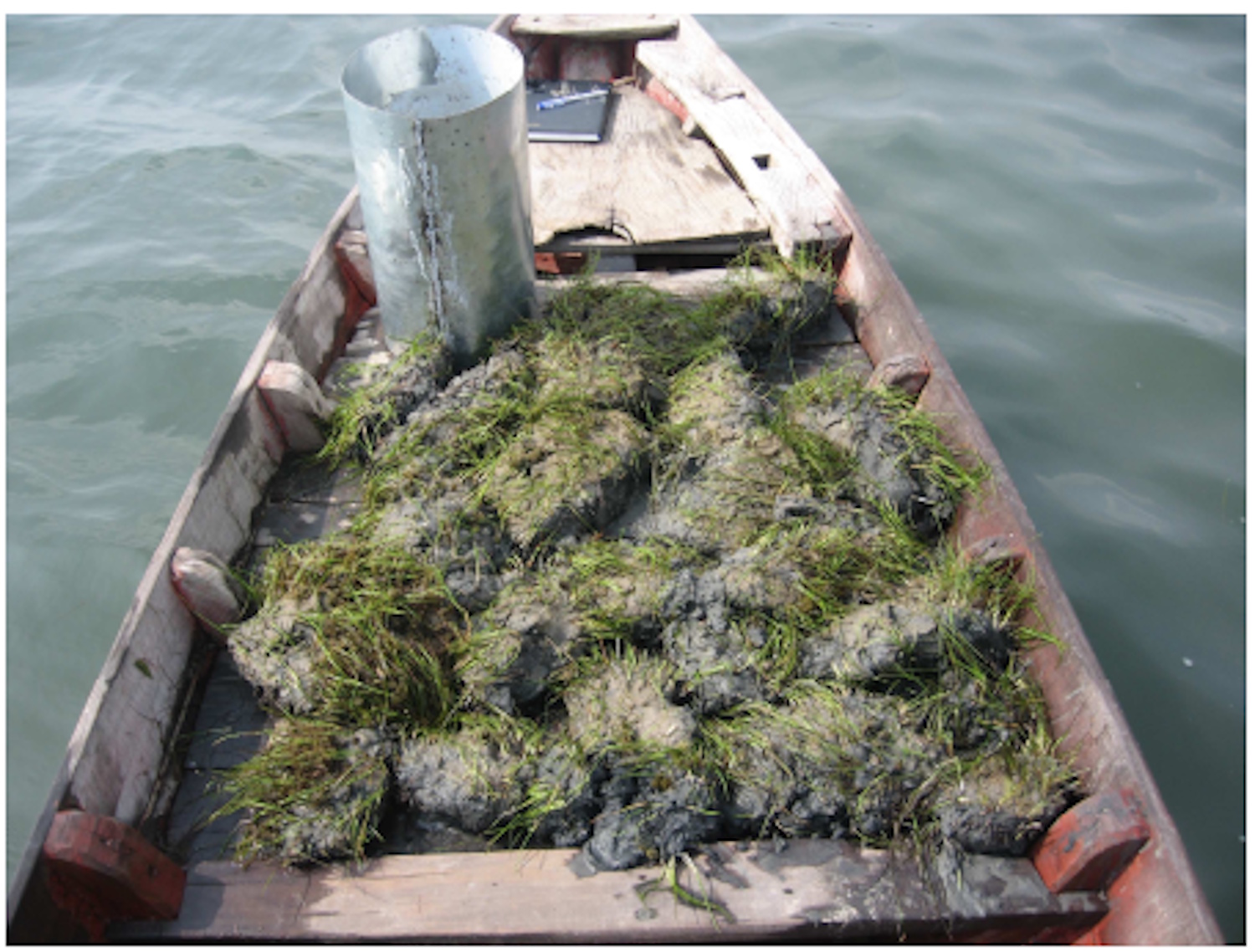
In Viet Nam, the updated seagrass distribution is estimated at 15,634 ha (Nguyen-Nhat et al. 2024). Fifteen seagrass species have been recorded, with three dominant species: Enhalus acoroides (Linnaeus f.) Royle, Thalassia hemprichii (Ehrenberg) Ascherson, and Halophila ovalis (R.Brown) J.D.Hooker (Nguyen et al. 2022a). Similar to other countries worldwide, seagrass beds in Viet Nam are experiencing degradation. Major threats include coastal development and habitat destruction, pollution and eutrophication, sedimentation and turbidity, destructive fishing behaviors, and climate change (Orth et al. 2006; Waycott et al. 2009). Small scale restoration for H. ovalis, E. acoroides, and Nanozostera japonica (Ascherson & Graebner) Tomlinson & Posluszny (Fig. 1) have been conducted at Ha Long Bay, Thu Bon estuary (Nguyen 2010), and Thuy Trieu lagoon (Pham 2008). However, genetic diversity of these three species was not considered. In this review, we present the degradation and restoration of seagrass in Viet Nam in comparison with global trends, and highlight the role of genetic diversity in seagrass restoration. In addition, lessons were mentioned from failures and successes of seagrass restoration in the world.
https://cdn.apub.kr/journalsite/sites/jjis/2026-003-02/N0560030202/images/jjis_03_02_02_F1.jpg
Fig. 1.

Transplantation of Nanozostera japonica from a healthy meadow to a disturbed site for restoration in Nui Thanh, Da Nang. Source: Nguyen (2010).

Seagrass degradation and loss

Despite the ecologically important role, seagrasses are declining globally. Both natural disturbances (e.g. storms, hurricanes, and diseases) and human activities (e.g. dredging, pollution, coastal development, boating, and fishing practices) are the main causes (Strydom et al. 2023). Waycott et al. (2009) reported that approximately 29% of the world’s seagrass beds have been lost or degraded since 1879. Mwikamba et al. (2024) reported annual seagrass loss rates of 0.29–1.59% in Kenya, 0.26–7.2% (1991–2013) in Mozambique, 2% (1972–2010) in Tunisia, and 2.8–38% (1960–2007) in South Africa. Therefore, Africa’s seagrass cover in some areas is declining even faster than the global average annual rate (7%). They also proposed that human-induced factors were the most significant threats to African seagrasses, with 74% of the identified drivers directly linked to human activities. Based on seagrass species and percent cover from a broad area of the Eastern Banks, Australia, Smart et al. (2025) found a decline in seagrass meadows due to changing species composition and reductions in spatial distribution. Another species Posidonia oceanica (Linnaeus) Delile meadows at The Ligurian Sea (northwestern Mediterranean) have lost nearly half of their original beds since the mid-19th century due to intensive coastal development (Montefalcone 2024). In Tampa Bay, Florida, USA, seagrass coverage has declined by about 11,518 acres since 2016 (Beck et al. 2024), which ascribed to alterations in physical water quality associated with climate change. In Australia, seagrass decline is consistent with global patterns, with at least 291,783 ha, equivalent to about 5.5% of the estimated national seagrass coverage lost since the 1930s (Statton et al. 2018).

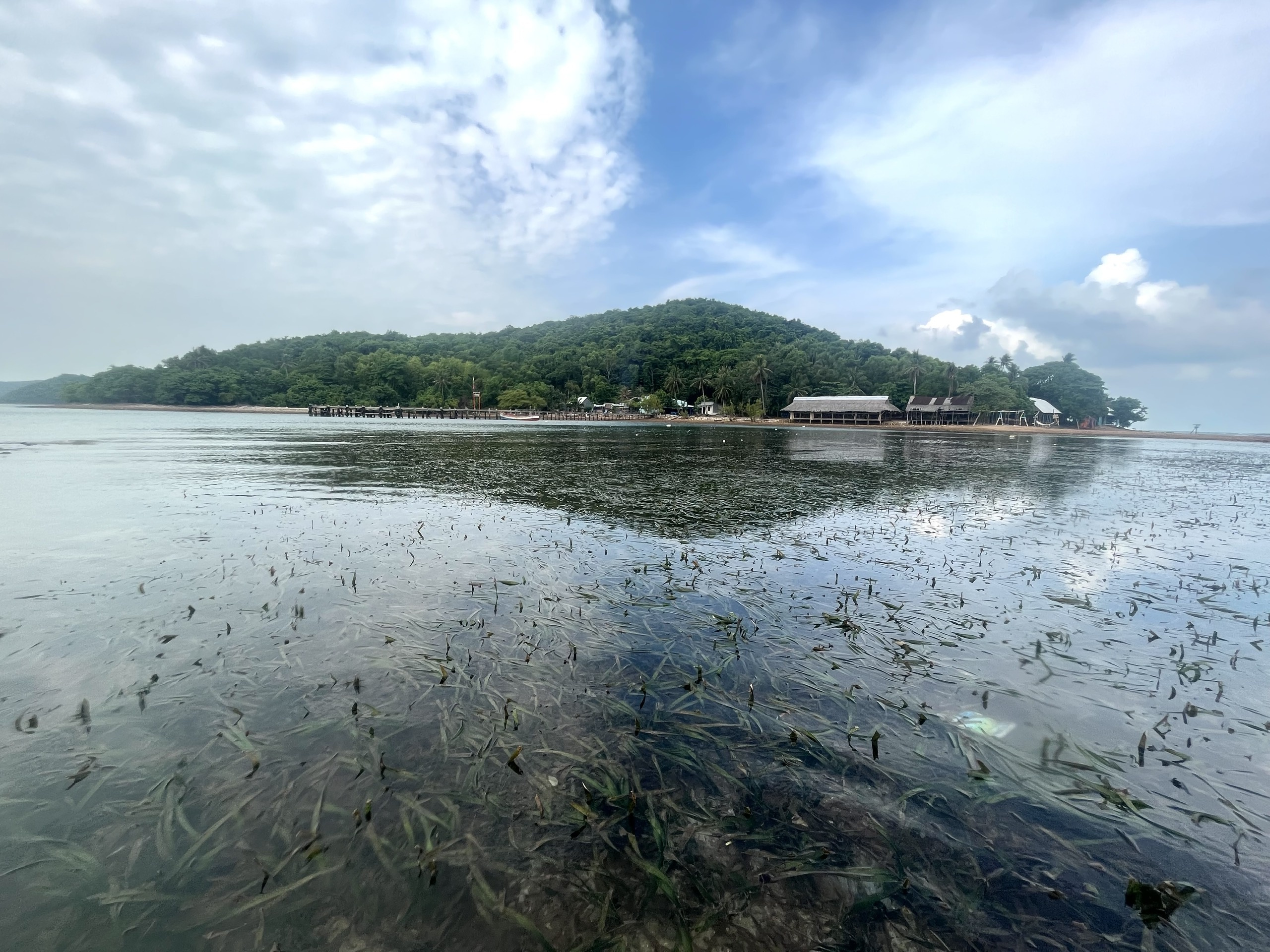
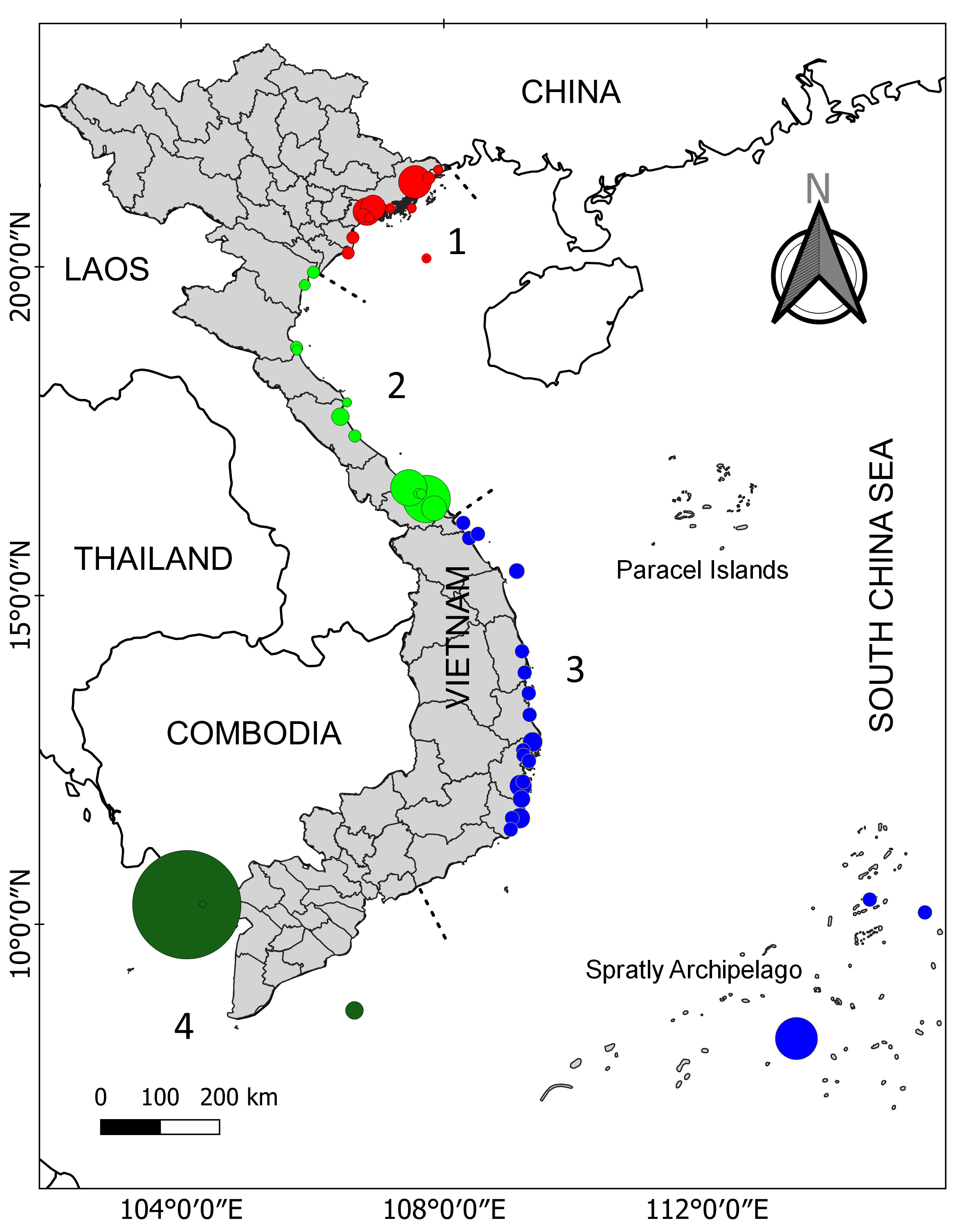
The coastline of Viet Nam is divided into four regions: northeast, north central, south central, and southern Viet Nam (Fig. 2). Seagrasses occur widely along the coast and around offshore islands, with the highest diversity found in the south central and southern regions. However, over the past several decades, the country has experienced a substantial decline in both seagrass extent and health. Nguyen et al. (2004) initially reported seagrass degradation in Khanh Hoa province. Subsequent detailed studies revealed spatial and temporal changes of seagrasses in specific areas. For instance, Vo et al. (2020) reported that 186.2 ha (equivalent to 35.8%) of the original seagrass beds in Van Phong Bay were lost over the past three decades due to various anthropogenic and natural factors. Similarly, Chen et al. (2016) found that the total area of seagrass beds in Cam Ranh Bay declined by approximately 25% (66 ha) from 1996 to 2015, primarily as a result of coastal development and infrastructure expansion. More recently, Nguyen et al. (2021a) estimated that the total coverage of seagrass beds in Southern Viet Nam to be 10,832 ha, with an estimated loss of 2,562 ha (or 19.1%). At the national scale, Trinh and Takeuchi (2019) estimated that seagrass coverage in Viet Nam has declined by about 46.5% (or 13,549 ha) since 1990. Seagrass beds in the West Sea of Viet Nam are undergoing degradation (Fig. 3). Key threats include coastal infrastructure development such as island ring roads and harbor construction as well as small-scale aquaculture activities, particularly fish and Babylonia areolata (sea snail) farming (Nguyen-Nhat et al. 2024).
https://cdn.apub.kr/journalsite/sites/jjis/2026-003-02/N0560030202/images/jjis_03_02_02_F2.jpg
Fig. 2.

Enhalus acoroides beds in Hon Son Island, the West Sea of Viet Nam. Photo by: Nhat-Thuy, 2024.

https://cdn.apub.kr/journalsite/sites/jjis/2026-003-02/N0560030202/images/jjis_03_02_02_F3.jpg
Fig. 3.

Map of Viet Nam showing seagrass distribution (round solid cycles). Scale of each cycle is proportional to the size of seagrass beds (Modified from Nguyen et al. 2022a).

Restoration of seagrass

Restoration has become an important strategy to reduce the global decline of seagrass ecosystems. Several techniques have been applied, including shoot transplantation and seed-based propagation. Selection of each method strongly depends on site characteristics, species and local environmental conditions (Unsworth et al. 2025). Broadly, restoration methods involve two categories: transplantation and seed-based approaches. Transplantation relocates adult shoots, sods, or plugs from healthy donor beds to degraded beds (Ferretto et al. 2021), whereas seed-based restoration uses the seeds collected from natural populations, which are either sown directly in the field or germinated under controlled conditions (Unsworth et al., 2025). However, survival rates vary widely across species and locations. In Australia, for example, restoration incorporated a wide range of methods such as the transplantation of sprigs, plugs, and seed-based interventions.

These efforts have ranged from small pilot projects to large-cale transplantation trials, incorporating both manual and mechanical planting techniques and employing various anchoring methods, including biodegradable pots, hooks, and pegs. Bastyan and Cambridge (2008) reported that transplanted Amphibolis antarctica (Labillardière) Ascherson exhibited considerable spatial and temporal variability in performance. Recruitment was recorded on all planting bags, and long-term survival (up to 38 months) ranged from 0 to 72 individuals/m². Using seeds sown into hessian, Tanner et al. (2014) demonstrated good recruitment and survival, with older bags (62 months after deployment) showing greater stem lengths than those observed in natural meadows at Grange, Australia. In contrast, restoration attempts involving H. ovalis and Zostera marina Linnaeus showed no evidence of the benefit of transplanting, as survival was virtually zero (Connolly et al. 2016).

For seed-based restoration, Buoy-Deployed Seeding (BDS) and Dispenser Injection Seeding (DIS) models were applied in Australia. The BDS technique involves collecting mature reproductive shoots and placing them in mesh bags attached to floating buoys, which are suspended above the target restoration area (Pickerell et al. 2005). As the shoots release their negatively buoyant seeds, the seeds naturally sink and settle across the intended restoration plot. Although this approach can be applied over relatively large spatial scales, its recruitment remains low, with only 1-6.9% of deployed seeds (Marion and Orth, 2010). DIS is one of the most recently developed techniques in seagrass restoration (Govers et al. 2022). In this method, seagrass seeds are combined with local sediment to form a sediment-seed mixture, which is then injected into the substrate using modified sealant guns. These iterative improvements resulted in an 83-fold increase in field plant densities (from 0.012 to 1.00 plants m-2) and a slight reduction in seed loss between 2015 and 2017, demonstrating the potential of DIS to enhance seagrass establishment in restoration sites. However, these developments have not yet resulted in self-sustaining seagrass populations.

Genetic diversity and restoration

In recently years, understanding genetic diversity and population structure of donor and recipient populations has been proved crucial to guide restoration and conservation strategies (Mijangos et al. 2015). Byeon et al. (2025) indicated that genetic diversity is key to maintaining ecological resilience, as it boosts seagrass population density, supports richer associated faunal communities, and enables quicker recovery after disturbances. The importance of assessing genetic diversity for restoration has been widely emphasized, particularly considering the need to evaluate donor bed diversity before undertaking seagrass transplantation. Recently, several studies stressed the urgent need to understand the relationships among threats, conservation management, and changes in genetic diversity (Moore et al. 2025; Shaw et al. 2025)

In the Eastern Mediterranean Sea, a genetic study of Posidonia oceanica provided valuable information for the restoration. Analyses of twelve microsatellite markers showed that genetic information can identify suitable donor meadows for transplantation and conservation priorities (Litsi-Mizan et al. 2024). Another study at two large-scale sites in Italy: Santa Marinella (Central Tyrrhenian Sea) and Ischia Porto (Southern Tyrrhenian Sea) indicated that shoot density after ten years in transplanted areas reached levels comparable to natural meadows. However, the phenological and lepidochronological traits were still different (Litsi-Mizan et al. 2024). These findings also provide valuable information for P. oceanica restoration. For other species, such as Halophila stipulacea (Forsskål) Ascherson in the Mediterranean, population genetic characteristic has been demonstrated essential for assessing invasion risks and refining conservation strategies for seagrass ecosystems (García-Escudero et al. 2023).

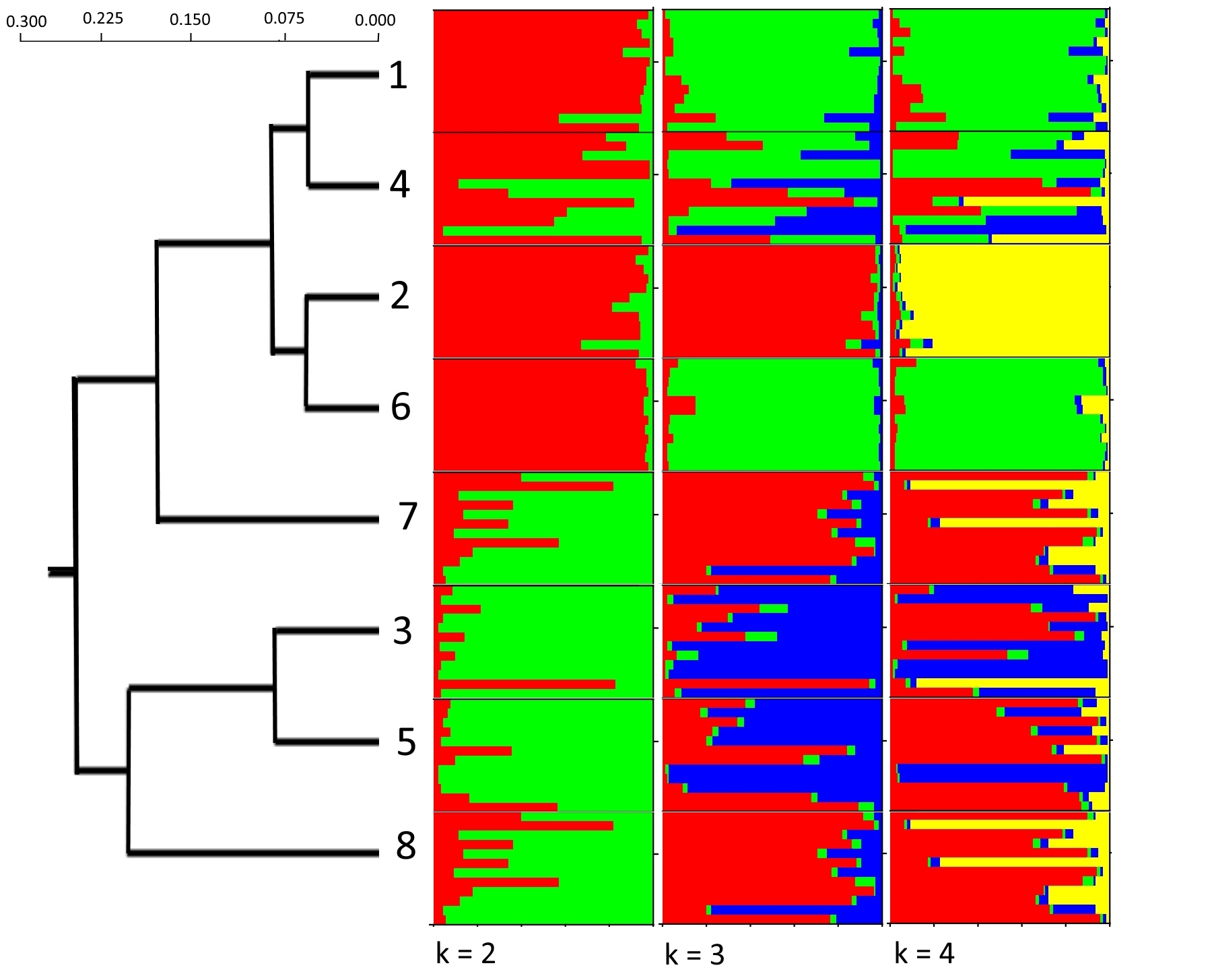
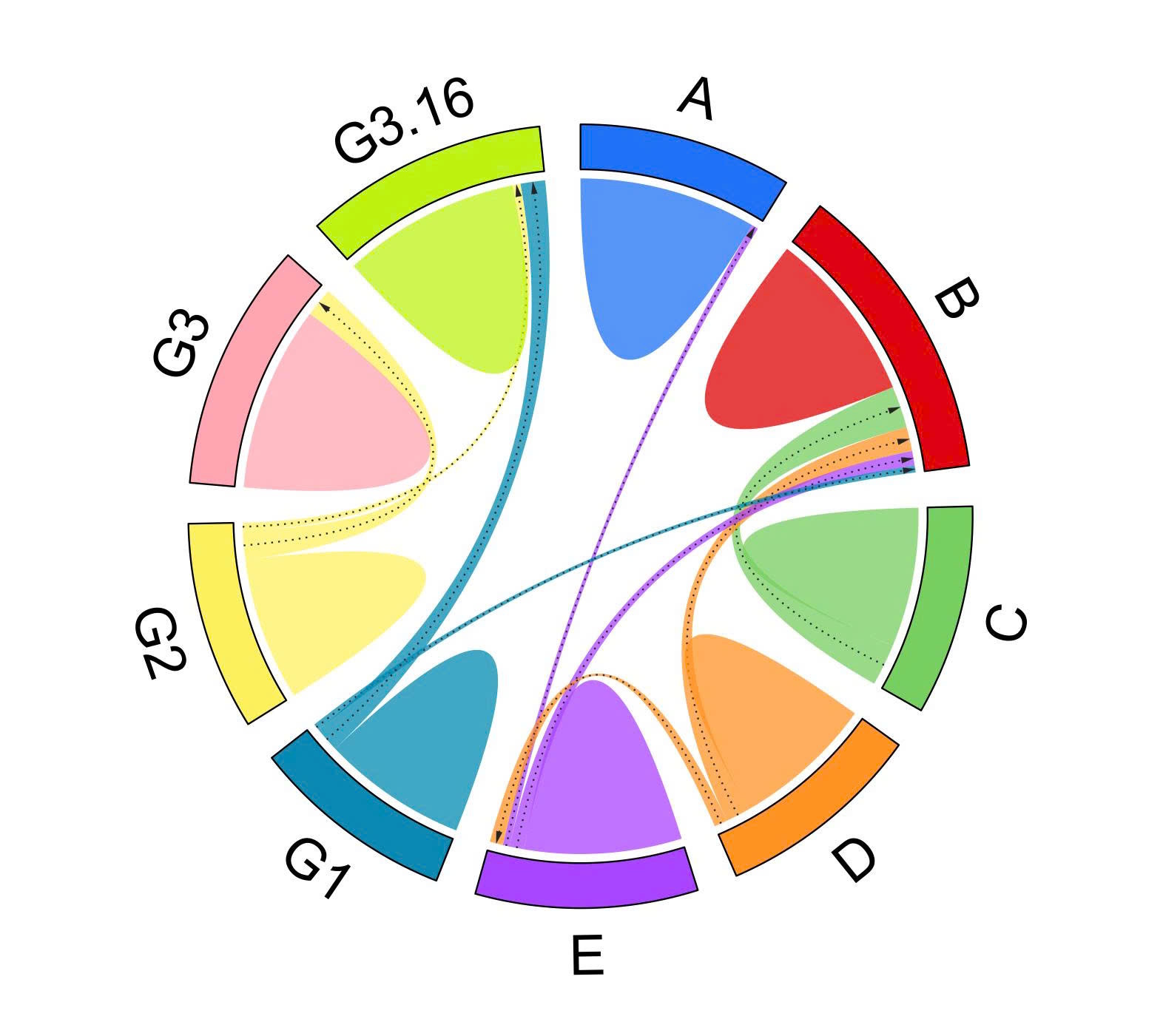
The role of genetic diversity in restoration of seagrass beds in Viet Nam also received increasing attention. Based on ten microsatellite loci, Nguyen et al. (2022b) revealed two genetic groups of T. hemprichii (hard bottom and soft bottom) (Fig. 4), and found that western boundary currents drove gene flow in southern Viet Nam. They also identified four populations with high relative genetic contribution to design conservation priorities. For other species E. acoroides, Nguyen and Papenbrock (2019) found that its meadows along the Khanh Hoa Province coastline exhibited reduced genetic diversity, as well as pronounced genetic differentiation between lagoon sites and open-sea sites. Eight E. acoroides populations along the South-Central Coast of Viet Nam were characterized with clonal richness, genetic diversity, and dispersal within and among populations in four lagoons (Dierick et al. 2021). The strong genetic differentiation among lagoons, suggests that these lagoon systems acted as barriers to gene flow, and large, persistent genets enhanced the resilience of E. acoroides meadows under high disturbance regimes. In addition, the Department of Marine Botany, Institute of Oceanography revealed that three populations of E. acoroides along Khanh Hoa coast may be used as donor sites for transplanting (unpublished data). The gene flows among E. acoroides populations in the Gulf of Thailand and East Sea of Viet Nam were clarified (Fig. 5).
https://cdn.apub.kr/journalsite/sites/jjis/2026-003-02/N0560030202/images/jjis_03_02_02_F4.jpg
Fig. 4.

The clustering analysis of 8 Thalassia hemprichii populations in Viet Nam. Hard bottom populations (1, 2 ,4, 6 and 7), and soft bottom populations (3, 5 and 8). Source: Nguyen et al. 2022b.

https://cdn.apub.kr/journalsite/sites/jjis/2026-003-02/N0560030202/images/jjis_03_02_02_F5.jpg
Fig. 5.

Gene flows among 9 Enhalus acoroides populations in South Viet Nam suggest two populations (C, D) acting as the donor (unpublished data).

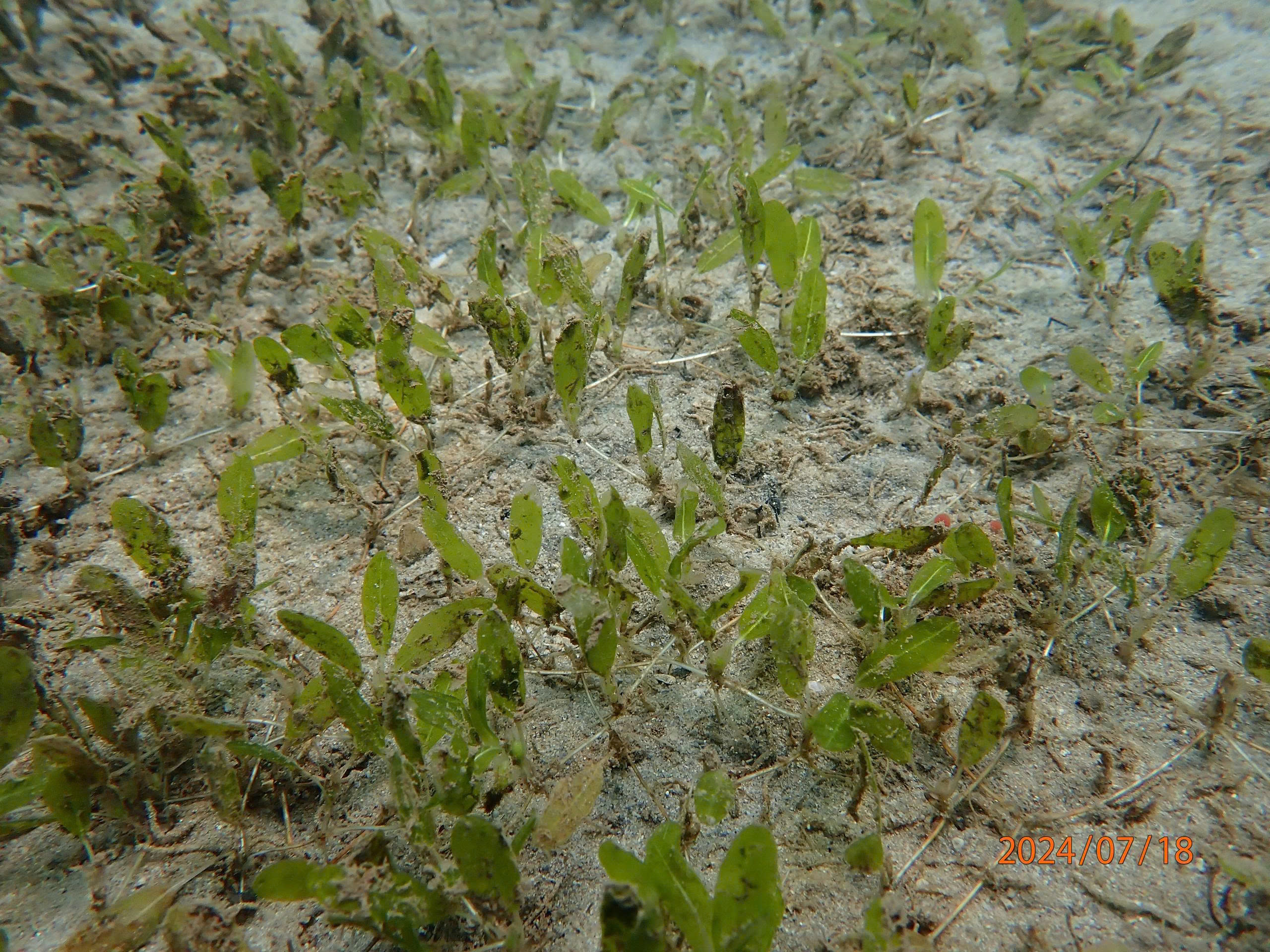
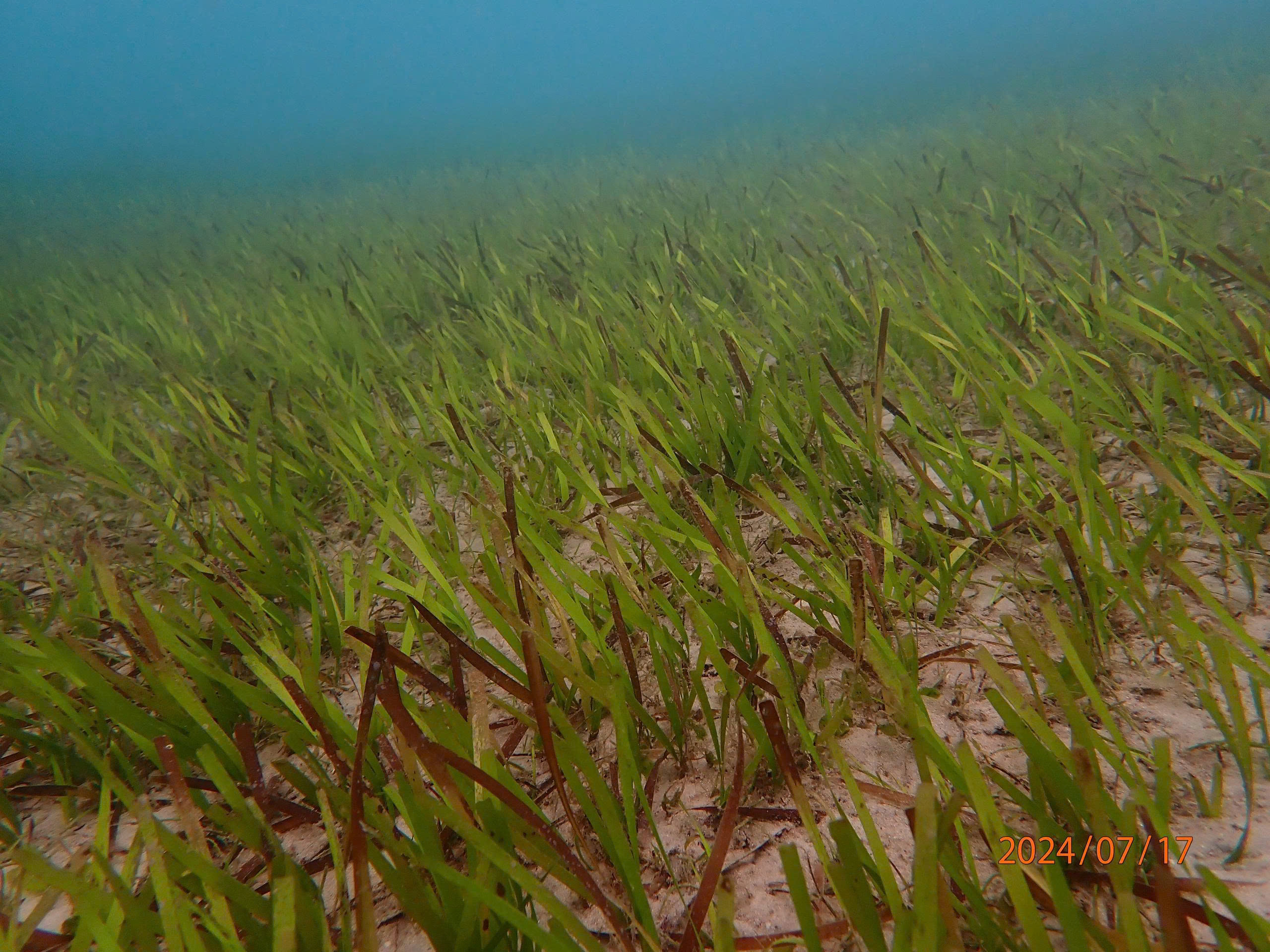
With the support from WWF, a seagrass restoration project is currently being implemented at Cu Lao Cham MPA, Da Nang. Cu Lao Cham is offshore islands, comprising a main island (approximately 15 km²) and seven smaller islands. Small scale seagrass beds occur surrounding these islands. Among the five species found in this area, Halophila decipiens Ostenfeld (Fig. 6) and Halodule pinifolia (Miki) Hartog (Fig. 7) are the two dominant. According to Tin et al. (2020), the coverage of seagrass beds at Cu Lao Cham experienced significant changes between 2003 and 2017. The bed lost 40.17 ha but gained 58.6 ha from 2003 to 2010. In contrast, from 2010 to 2017, seagrass coverage exhibited a loss of 68.76 ha with only 7.27 ha of newly formed beds. They also reported that Halophila ovalis and Nanozostera japonica were the two of five species recorded in this area. However, Cao et al. (2019) did not include Nanozostera japonica and Oceana serrulata (R.Brown) Byng & Christenhusz (former name: Cymodocea serrulata) in the seagrass species list of Cu Lao Cham. Several specimens of Halophila major (Zollinger) Miquel were misidentified as Halophila ovalis due to the overlap of morphological traits between each other. Recently, Nguyen et al. (2021b) noted that H. major mainly occurs in the offshore island, whereas H. ovalis is commonly found in inland lagoons. In addition, the putative hybridization between H. ovalis and H. major has been reported (Liu et al. 2020; Nguyen-Nhat et al. 2024). Therefore, the application of genetic markers is essential for improving our understanding of species identities and genetic diversity of seagrass in Cu Lao Cham MPA, an offshore ecosystem.
https://cdn.apub.kr/journalsite/sites/jjis/2026-003-02/N0560030202/images/jjis_03_02_02_F6.jpg
Fig. 6.

Halophia decipiens at Cu Lao Cham MPA. Photo by Phuong Thao.

https://cdn.apub.kr/journalsite/sites/jjis/2026-003-02/N0560030202/images/jjis_03_02_02_F7.jpg
Fig. 7.

Halodule pinifolia at Bai Bac, Cu Lao Cham MPA. Photo by Phuong Thao.

For mangroves, recent studies have also emphasized that maintaining genetic diversity is essential for successful restoration because populations with higher genetic diversity exhibit greater adaptive potential, resilience, and long-term ecosystem stability (Wee et al. 2019). In Viet Nam, three decades after the Viet Nam War ended, populations of Avicennia alba were still increasing in the Mekong Delta (Arnaud-Haond et al. 2009). For another species of mangroves, Sonneratia caseolaris, Le and Le (2024) reported high levels of genetic variation both among and within natural populations in Viet Nam, and the authors suggested that conservation of genetic resources is urgently needed for their future use in conservation and reforestation programs. In the South Central Coast of Viet Nam, the genetic diversity data of Rhizophora apiculata provided important recommendations for mangrove breeding and restoration programs (Hong Nguyen et al. 2025). In Brazil, using inter-simple sequence repeat (ISSR) markers for two species including Laguncularia racemosa and Avicennia schaueriana, Granado et al. (2018) indicated that knowledge of genetic monitoring associated with restoration activities can help avoid bottlenecks and other pitfalls. Analyses of genetic diversity and mating systems have been applied for conservation and restoration strategies of Rhizophora apiculata and Avicennia marina in Tielu Harbor Mangrove Nature Reserve, China (Lu et al. 2022). For marine macroalgae, recent studies have highlighted that preserving genetic diversity is critical for successful restoration and long-term resilience (Coleman et al. 2020). Based on genetic baseline data, three populations of the red alga Ahnfeltiopsis pusilla located in the southernmost sites of the Northwest Iberian Peninsula were identified as particularly valuable for conservation because they contain most of the species’ genetic heritage and provide useful insights for the conservation of endangered seaweeds (Couceiro et al. 2011). Kelp forests have experienced localized to regional declines due to multiple stressors, including eutrophication, overgrazing, ocean warming, and marine heatwaves (Carnell and Keough 2019). Understanding genetic structure appears to be a key factor for successful large-scale restoration (Coleman and Wernberg 2018; Wernberg et al. 2018). In support of restoration practices for coastal shrub species (Westringia fruticosa and Acacia suaveolens), Rossetto et al. (2019) suggested that genomic data are an important component in decisions regarding the sourcing of restoration materials to meet specific restoration objectives.

Based on these previous studies, the role of genetic diversity in seagrass restoration can be listed as follows:

ⅰ) Seagrass populations with higher genetic diversity have greater tolerance to environmental changes such as temperature, salinity, turbidity, and nutrients (Hughes and Stachowicz 2004);

ⅱ) Using multiple genotypes in restoration can enhances survival, density, and growth of seagrass. Therefore, it maintains both success and stability of seagrass beds (Pazzaglia et al. 2021);

ⅲ) Due to resistant genotypes, genetic variation can support populations against disease, and help conserve population structure and ecological functions during outbreaks (Ries et al. 2023);

ⅳ) Seagrass beds with high genetic diversity provide stronger services such as carbon storage, sediment stabilization, nutrient cycling, and functions of habitat (Bijak et al. 2023);

ⅴ) Genetic diversity enhances flowering rates, seed production, the success of sexual recruitment, and long-term survival (Alotaibi et al. 2019);

ⅵ) Genetic diversity increases the capacity of populations to adapt to environmental changes such as temperatures and storm, thereby supporting long-term ecosystem stability (Ehlers et al. 2008);

ⅶ) Genetic data can be used to reveal suitable donor beds, ensuring that genotypes are appropriate for sink meadows (Mijangos et al. 2015); and

ⅷ) Introducing genotypes with advantageous traits such as heat or salinity tolerance, can improve restoration outcomes and enhance the resilience of restored seagrass meadows under climate change (Unsworth et al. 2025)

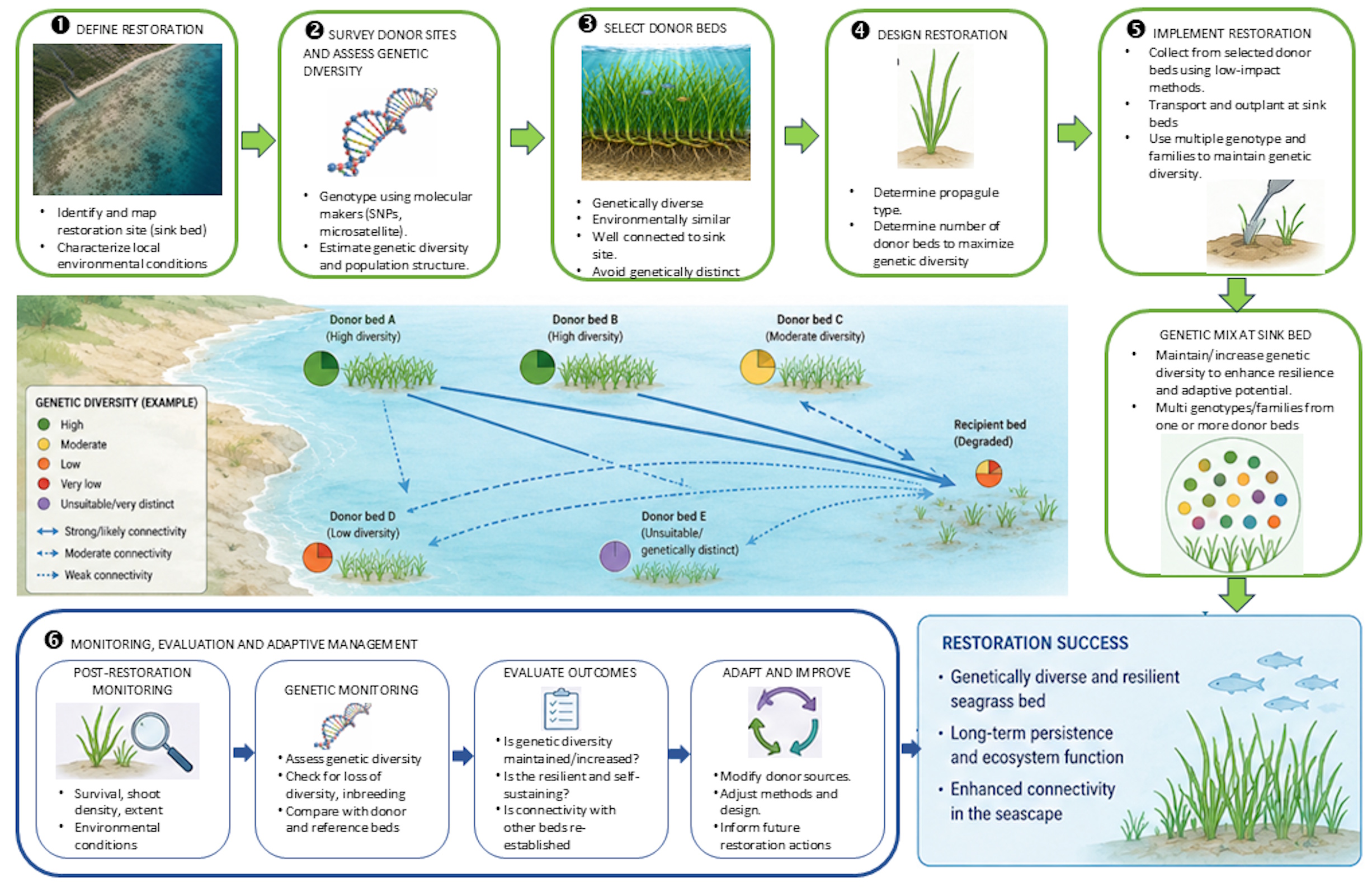
The following diagram illustrates how use genetic diversity information can be used to guide seagrass bed restoration of seagrass beds, including the donor and recipient beds in nature (Fig. 8). We propose six key steps for restoration success of seagrass beds: 1. Define restoration, 2. Survey donor populations and assess genetic diversity, 3. Select donor populations, 4. Design restoration, 5. Implement restoration, and 6. Monitoring, evaluation and adaptive management. Finally, successful seagrass restoration is expected to result in genetically diverse and resilient populations, long-term persistence and ecosystem function, and improved connectivity across the seascape.
https://cdn.apub.kr/journalsite/sites/jjis/2026-003-02/N0560030202/images/jjis_03_02_02_F8.jpg
Fig. 8.

Proposed framework for seagrass restoration guided by genetic diversity information.

Conclusion

This review highlights recent patterns of seagrass degradation, summarizes key restoration techniques, and emphasizes the importance of genetic diversity in supporting successful restoration efforts of seagrass beds. The lessons learned from past restoration initiatives can inform future projects in Viet Nam, where seagrass meadows are increasingly the focus of restoration and conservation activities.


Acknowledgements

We would like to express our sincere gratitude to Prof. Myung Sook Kim and Dr. Miyeon Yang at the Research Institute for Basic Sciences, Jeju National University, for their support during our work in Korea. We are also deeply grateful to staff of Management Board of Cham Island MPA and the World-Wide Fund for Nature in Viet Nam for providing valuable information. This study was supported by the National Foundation for Science & Technology Development (NAFOSTED), Viet Nam, under grant number 106.06-2023.25.

References

1

Alotaibi, N. M., Kenyon, E. J., Cook, K. J., Börger, L., & Bull, J. C. 2019. Low genotypic diversity and long-term ecological decline in a spatially structured seagrass population. Scientific Reports 9(1): 18387. https://doi.org/10.1038/s41598-019-54828-1

10.1038/s41598-019-54828-131804557PMC6895181
2

Arnaud-Haond, S., Duarte, C. M., Teixeira, S., Massa, S. I., Terrados, J., Tri, N. H., & Serrao, E. A. 2009. Genetic recolonization of mangrove: genetic diversity still increasing in the Mekong Delta 30 years after Agent Orange. Marine Ecology Progress Series 390: 129-135. https://doi.org/10.3354/meps08183

10.3354/meps08183
3

Bastyan, G. R. and Cambridge, M. L. 2008. Transplantation as a method for restoring the seagrass Posidonia australis. Estuarine, Coastal and Shelf Science 79(2): 289-299. https://doi.org/10.1016/j.ecss.2008.04.012

10.1016/j.ecss.2008.04.012
4

Beck, M. W., Flaherty-Walia, K., Scolaro, S., Burke, M. C., Furman, B. T., Karlen, D. J., Pratt, C., Anastasiou, C. J., & Sherwood, E. T. 2024. Hot and fresh: Evidence of climate-related suboptimal water conditions for seagrass in a Large Gulf Coast Estuary. Estuaries and Coasts 47(6): 1475-1497. https://doi.org/10.1007/s12237-024-01385-0

10.1007/s12237-024-01385-0
5

Bijak, A. L., Reynolds, L. K., & Smyth, A. R. 2023. Seagrass meadow stability and composition influence carbon storage. Landscape Ecology 38(12): 4419-4437. https://doi.org/10.1007/s10980-023-01700-3

10.1007/s10980-023-01700-3
6

Byeon, S. Y., Moon, K., Choi, S. K., Choi, H.-k., Kim, S., Kang, J. H., Park, S. R., & Lee, H. J. 2025. Genetic diversity and seascape population structure in eelgrass (Zostera marina) meadows in the northwestern Pacific. Global Ecology and Conservation 61: e03688. https://doi.org/10.1016/j.gecco.2025.e03688

10.1016/j.gecco.2025.e03688
7

Cao, V. L., Chu, T. C., Nguyen, V. V., & Uong, D. K. 2019. Current status and trends of seagrass habitats in the Cu Lao Cham marine protected area. Journal of Natural Resources and Environment 26: 27-34 (in Vietnamese).

8

Carnell, P. E. and Keough, M. J. 2019. Reconstructing historical marine populations reveals major decline of a kelp forest ecosystem in Australia. Estuaries and Coasts 42: 765-778. https://doi.org/10.1007/s12237-019-00525-1

10.1007/s12237-019-00525-1
9

Chen, C.-F., Lau, V.-K., Chang, N.-B., Son, N.-T., Tong, P.-H.-S., & Chiang, S.-H. 2016. Multitemporal change detection of seagrass beds using integrated Landsat TM/ETM+/OLI imageries in Cam Ranh Bay, Vietnam. Ecological Informatics 35: 43-54. https://doi.org/10.1016/j.ecoinf.2016.07.005

10.1016/j.ecoinf.2016.07.005
10

Coleman, M. A. and Wernberg, T. 2018. Genetic and morphological diversity in sympatric kelps with contrasting reproductive strategies. Aquatic Biology 27: 65-73. https://doi.org/10.3354/ab00698

10.3354/ab00698
11

Coleman, M. A., Wood, G., Filbee-Dexter, K., Minne, A. J. P., Goold, H. D., Vergés, A., & Wernberg, T. 2020. Restore or redefine: future trajectories for restoration. Frontiers in Marine Science 7: 237. https://doi.org/10.3389/fmars.2020.00237

10.3389/fmars.2020.00237
12

Connolly, R. M., Dunn, R. J. K., Flindt, M. R., Jackson, E. L., Kristensen, E., & McKenna, S. 2016. Assessment of the fffects of foreshore nourishment and mitigation projects on seagrass ecosystems (SRMP-004). Report to Gold Coast Waterways Authority. Gold Coast: Griffith University.

13

Connolly, R. M., Smith, T. M., Maxwell, P. S., Olds, A. D., Macreadie, P. I., & Sherman, C. D. H. 2018. Highly disturbed populations of seagrass show increased resilience but lower genotypic diversity. Frontiers in Plant Science 9: 894. https://doi.org/10.3389/fpls.2018.00894

10.3389/fpls.2018.0089430008728PMC6034141
14

Couceiro, L., Maneiro, I., Ruiz, J. M. & Barreiro, R. 2011. Multiscale genetic structure of an endangered seaweed Ahnfeltiopsis pusilla (Rhodophyta): implications for its conservation. Journal of Phycology 47: 259-268. https://doi.org/10.1111/j.1529-8817.2011.00959.x

10.1111/j.1529-8817.2011.00959.x
15

Dierick, J., Phan, T. T. H., Luong, Q. D., & Triest, L. 2021. Persistent clones and local seed recruitment contribute to the resilience of Enhalus acoroides populations under disturbance. Frontiers in Plant Science 12: 658213. https://doi.org/10.3389/fpls.2021.658213

10.3389/fpls.2021.65821334220884PMC8248806
16

do Amaral Camara Lima, M., Bergamo, T. F., Ward, R. D., & Joyce, C. B. 2023. A review of seagrass ecosystem services: providing nature-based solutions for a changing world. Hydrobiologia 850(12): 2655-2670. https://doi.org/10.1007/s10750-023-05244-0

10.1007/s10750-023-05244-0
17

Dunic, J. C., Brown, C. J., Connolly, R. M., Turschwell, M. P., & Côté, I. M. 2021. Long-term declines and recovery of meadow area across the world’s seagrass bioregions. Global Change Biology 27(17): 4096-4109. https://doi.org/10.1111/gcb.15684

10.1111/gcb.15684
18

Ehlers, A., Worm, B., & Reusch, T. B. H. 2008. Importance of genetic diversity in eelgrass Zostera marina for its resilience to global warming. Marine Ecology Progress Series 355: 1-7. https://doi.org/10.3354/meps07369

10.3354/meps07369
19

Ferretto, G., Glasby, T. M., Poore, A. G. B., Callaghan, C. T., Housefield, G. P., Langley, M., Sinclair, E. A., Statton, J., Kendrick, G. A., & Vergés, A. 2021. Naturally-detached fragments of the endangered seagrass Posidonia australis collected by citizen scientists can be used to successfully restore fragmented meadows. Biological Conservation 262: 109308. https://doi.org/10.1016/j.biocon.2021.109308

10.1016/j.biocon.2021.109308
20

García-Escudero, C. A., Tsigenopoulos, C. S., Manousaki, T., Tsakogiannis, A., Marbà, N., Vizzini, S., Duarte, C. M., & Apostolaki, E. T. 2023. Population genomics unveils the century-old invasion of the seagrass Halophila stipulacea in the Mediterranean Sea. Marine Biology 171(2): 40. https://doi.org/10.1007/s00227-023-04361-7

10.1007/s00227-023-04361-7
21

Govers, L. L., Heusinkveld, J. H. T., Gräfnings, M. L. E., Smeele, Q., & van der Heide, T. 2022. Adaptive intertidal seed-based seagrass restoration in the Dutch Wadden Sea. PlosONE 17(2): e0262845. https://doi.org/10.1371/journal.pone.0262845

10.1371/journal.pone.026284535139086PMC8827467
22

Granado, R., Pinto Neta, L. C., Nunes-Freitas, A. F., Voloch, C. M., & Lira, C. F. 2018. Assessing genetic diversity after mangrove restoration in Brazil: why is it so important? Diversity 10: 27. https://doi.org/10.3390/d10020027

10.3390/d10020027
23

Hong Nguyen, N., Nguyen, T. D., Thi Tran, G. H., Quoc Nguyen, H., Pham, N. B., Hoang Chu, H., & Do, P. T. 2025. Genetic diversity of the tall-stilt mangrove (Rhizophora apiculata Blume) in Southern Central Coast of Vietnam using SSR markers. Academia Journal of Biology 47: 137-150. https://doi.org/10.15625/2615-9023/21433

10.15625/2615-9023/21433
24

Hughes, A. R. and Stachowicz, J. J. 2004. Genetic diversity enhances the resistance of a seagrass ecosystem to disturbance. Proceedings of the National Academy of Sciences of the United States of America 101(24): 8998-9002. https://doi.org/10.1073/pnas.0402642101

10.1073/pnas.040264210115184681PMC428461
25

Le, S. and Le, T. V. 2024. Genetic diversity and population structure of natural provenances of Sonneratia caseolaris in Vietnam. Journal of Genetic Engineering and Biotechnology 22: 100356. https://doi.org/10.1016/j.jgeb.2024.100356

10.1016/j.jgeb.2024.10035638494260PMC10903747
26

Litsi-Mizan, V., García-Escudero, C. A., Tsigenopoulos, C. S., Tsiaras, K., Gerakaris, V., & Apostolaki, E. T. 2024. Unravelling the genetic pattern of seagrass (Posidonia oceanica) meadows in the Eastern Mediterranean Sea. Biodiversity and Conservation 33(1): 257-280. https://doi.org/10.1007/s10531-023-02746-0

10.1007/s10531-023-02746-0
27

Liu, S. Y. V., Kumara, T. P., & Hsu, C.-H. 2020. Genetic identification and hybridization in the seagrass genus Halophila (Hydrocharitaceae) in Sri Lankan waters. PeerJ 8: e10027. https://doi.org/10.7717/peerj.10027

10.7717/peerj.1002733062439PMC7532775
28

Lu, W., Zou, Z., Hu, X., & Yang, S. 2022. Genetic diversity and mating system of two mangrove species (Rhizophora apiculata and Avicennia marina) in a heavily disturbed area of China. Forests 14: 115. https://doi.org/10.3390/d14020115

10.3390/d14020115
29

Marion, S. R. and Orth, R. J. 2010. Innovative techniques for large-scale seagrass restoration using Zostera marina (eelgrass) seeds. Restoration Ecology 18(4): 514-526. https://doi.org/10.1111/j.1526-100X.2010.00692.x

10.1111/j.1526-100X.2010.00692.x
30

Mijangos, J. L., Pacioni, C., Spencer, P. B. S., & Craig, M. D. 2015. Contribution of genetics to ecological restoration. Molecular Ecology 24(1): 22-37. https://doi.org/10.1111/mec.12995

10.1111/mec.12995
31

Montefalcone, M. 2024. Challenges in restoring Mediterranean seagrass ecosystems in the Anthropocene. Environments 11(5): 86. https://doi.org/10.3390/environments11050086

10.3390/environments11050086
32

Moore, M. L., Allsing, N., Hartwick, N. T., Mamerto, A., Murray, E. R., Sanders, R. D., & Michael, T. P. 2025. Hybridization and low-light adaptability in California eelgrass (Zostera spp.). Nature Plants 11: 2409-2422. https://doi.org/10.1038/s41477-025-02142-2

10.1038/s41477-025-02142-241162626PMC12626889
33

Mwikamba, E. M., Githaiga, M. N., Briers, R. A., & Huxham, M. 2024. A review of seagrass cover, status and trends in Africa. Estuaries and Coasts 47(4): 917-934. https://doi.org/10.1007/s12237-024-01348-5

10.1007/s12237-024-01348-5
34

Nguyen, H. D. 2010. Management and restoration of seagrass beds in Nui Thanh district, Quang Nam province. Journal of Marine Science and Technology 10(2): 63-75.

35

Nguyen, H. D., Pham, H. T., Nguyen, T. L., & Nguyen, X. V. 2004. The degradation of seagrass beds in Khanh Hoa province and the ability of restoration of these meadows. Proceedings of the national conference Bien Dong 2002. Agricultural Publishing House, Ho Chi Minh City, pp 358-369.

36

Nguyen, X.-V. and Papanbrock, J. 2019. Assessment by microsatellite analysis of genetic diversity and population structure of Enhalus acoroides from the coast of Khanh Hoa Province, Vietnam. Acta Oceanologica Sinica 38(1): 144-150. https://doi.org/10.1007/s13131-019-1381-y

10.1007/s13131-019-1381-y
37

Nguyen, X.-V., Lau, V.-K., Nguyen-Nhat, N.-T., Nguyen, T.-H., Phan, K.-H., Dao, V.-H., Ho-Dinh, D., Hayashizaki, K.-i., Fortes, M. D., & Papenbrock, J. 2021a. Update of seagrass cover and species diversity in Southern Viet Nam using remote sensing data and molecular analyses. Regional Studies in Marine Science 44: 101803. https://doi.org/10.1016/j.rsma.2021.101803

10.1016/j.rsma.2021.101803
38

Nguyen, X.-V., Nguyen-Nhat, N.-T., Nguyen, X.-T., Dao, V.-H., M. Liao, L., & Papenbrock, J. 2021b. Analysis of rDNA reveals a high genetic diversity of Halophila major in the Wallacea region. Plos ONE 16(10): e0258956. https://doi.org/10.1371/journal.pone.0258956

10.1371/journal.pone.025895634679102PMC8535426
39

Nguyen, X.-V., Nguyen-Nhat, N.-T., Nguyen, X.-T., Dao, V.-H., McDermid, K. J., & Papenbrock, J. 2022a. Microsatellite-based analysis of the genetic diversity and population structure of the seagrass species Thalassia hemprichii from southern Viet Nam. Aquatic Botany 178: 103497. https://doi.org/10.1016/j.aquabot.2022.103497

10.1016/j.aquabot.2022.103497
40

Nguyen, X.-V., Phan, T. T. H., Cao, V.-L., Nguyen Nhat, N.-T., Nguyen, T.-H., Nguyen, X.-T., Lau, V.-K., Hoang, C.-T., Nguyen-Thi, M.-N., Nguyen, H. M., Dao, V.-H., Teichberg, M., & Papenbrock, J. 2022b. Current advances in seagrass research: A review from Viet Nam. Frontiers in Plant Science 13: 991865. https://doi.org/10.3389/fpls.2022.991865

10.3389/fpls.2022.99186536299785PMC9589349
41

Nguyen-Nhat, N.-T., Lau, V.-K., Nguyen, X.-T., Nguyen, T.-H., Nguyen, M.-N. T., Dao, V.-H., & Nguyen, X.-V. 2024. Baseline study on the seagrass distribution and species diversity of the seagrass at West Sea (Viet Nam) with integrated approaches. Regional Studies in Marine Science 77: 103654. https://doi.org/10.1016/j.rsma.2024.103654

10.1016/j.rsma.2024.103654
42

Orth, R. J., Carruthers, T. J. B., Dennison, W. C., Duarte, C. M., Fourqurean, J. W., Heck Jr., K. L., Hughes, A. R., Kendrick, G. A., Kenworthy, W. J., Olyarnik, S., Short, F. T., Waycott, M., & Williams, S. L. 2006. A global crisis for seagrass ecosystems. BioScience 56(12): 987-996. https://doi.org/10.1641/0006-3568(2006)56[987:AGCFSE]2.0.CO;2

10.1641/0006-3568(2006)56[987:AGCFSE]2.0.CO;2
43

Pazzaglia, J., Nguyen, H. M., Santillán-Sarmiento, A., Ruocco, M., Dattolo, E., Marín-Guirao, L., & Procaccini, G. 2021. The genetic component of seagrass restoration: What we know and the way forwards. Water 13(6): 829. https://doi.org/10.3390/w13060829

10.3390/w13060829
44

Pham, H. T. 2008. Final report: Rehabilitation and conservation the seagrass meadows at Cam Hai Dong, Cam Ranh Bay, Khanh Hoa province, central Vietnam. Rufford Maurice Laing Foundation, pp. 21. Retrieved from https://media.rufford.org/media/project_reports.

45

Pickerell, C. H., Schott, S., & Wyllie-Echeverria, S. 2005. Buoy-deployed seeding: Demonstration of a new eelgrass (Zostera marina L.) planting method. Ecological Engineering 25(2): 127-136. https://doi.org/10.1016/j.ecoleng.2005.03.005

10.1016/j.ecoleng.2005.03.005
46

Ries, S. R., Faust, E., Johannesson, K., Jonsson, P. R., Moksnes, P.-O., Pereyra, R. T., & Jahnke, M. 2023. Genetic structure and diversity of the seagrass Zostera marina along a steep environmental gradient, with implications for genetic monitoring. Frontiers in Climate 5: 1303337. https://doi.org/10.3389/fclim.2023.1303337

10.3389/fclim.2023.1303337
47

Rossetto, M., Bragg, J., Kilian, A., McPherson, H., van der Merwe, M., & Wilson, P. D. 2019. Restore and renew: a genomics-era framework for species provenance delimitation. Restoration Ecology 27: 538-548. https://doi.org/10.1111/rec.12898

10.1111/rec.12898
48

Shaw, R. E., Farquharson, K. A., Bruford, M. W., Coates, D. J., Elliott, C. P., Mergeay, J., O’Brien, D., Ortiz-Catedral, L., Pierson, J. C., Segelbacher, G., Sunnucks, P., van Oosterhout, C., Waters, J. M., Weeks, A. R., & Grueber, C. E. 2025. Global meta-analysis shows action is needed to halt genetic diversity loss. Nature 638(8051): 704-710. https://doi.org/10.1038/s41586-024-08458-x

10.1038/s41586-024-08458-x39880948PMC11839457
49

Short, F. T., Polidoro, B., Livingstone, S. R., Carpenter, K. E., Bandeira, S., Bujang, J. S., . . . Zieman, J. C. 2011. Extinction risk assessment of the world’s seagrass species. Biological Conservation 144(7): 1961-1971. https://doi.org/10.1016/j.biocon.2011.04.010

10.1016/j.biocon.2011.04.010
50

Silva, S. L. d., Carvalho, R. d., & Magalhães, K. M. 2021. Chromosomal evolution in seagrasses: Is the chromosome number decreasing? Aquatic Botany 173: 103410. https://doi.org/10.1016/j.aquabot.2021.103410

10.1016/j.aquabot.2021.103410
51

Smart, J. N., Hammerman, N. M., Golding, K. M., Markey, K., Kovacs, E., & Roelfsema, C. 2025. Decadal monitoring shows seagrass decline and community shifts following environmental disturbance in Moreton Bay, south-eastern Queensland, Australia. Marine & Freshwater Research 76(10): MF25049. https://doi.org/10.1071/MF25049

10.1071/MF25049
52

Statton, J., Dixon, K. W., Irving, A. D., Jackson, E. L., Kendrick, G. A., Orth, R. J., & Sinclair, E. A. 2018. Decline and restoration ecology of Australian seagrasses. In A. W. D. Larkum, G. A. Kendrick, & P. J. Ralph (Eds.), Seagrasses of Australia: Structure, Ecology and Conservation (pp. 665-704). Cham: Springer International Publishing. https://doi.org/10.1007/978-3-319-71354-0_20

10.1007/978-3-319-71354-0_20
53

Strydom, S., McCallum, R., Lafratta, A., Webster, C. L., O’Dea, C. M., Said, N. E., Duarte, C. M., Kendrick, G. A., McMahon, K. M., McKenzie, L. J., Short, F. T., Sullivan, B. K., York, P. H., & Serrano, O. 2023. Global dataset on seagrass meadow structure, biomass and production. Earth System Science Data 15(1): 511-519. https://doi.org/10.5194/essd-15-511-2023

10.5194/essd-15-511-2023
54

Sudo, K. and Nakaoka, M. 2020. Fine-scale distribution of tropical seagrass beds in Southeast Asia. Ecological Research 35(6): 994-1000. https://doi.org/10.1111/1440-1703.12137

10.1111/1440-1703.12137
55

Tanner, J. E., Irving, A. D., Fernandes, M., Fotheringham, D., McArdle, A., & Murray-Jones, S. 2014. Seagrass rehabilitation off metropolitan Adelaide: a case study of loss, action, failure and success. Ecological Management & Restoration 15(3): 168-179. https://doi.org/10.1111/emr.12133

10.1111/emr.12133
56

Tin, H. C., Uyen, N. T., Hieu, D. V., Ni, T. N. K., Tu, N. H. C., & Saizen, I. 2020. Decadal dynamics and challenges for seagrass beds management in Cu Lao Cham Marine Protected Area, Central Vietnam. Environment, Development and Sustainability 22(8): 7639-7660. https://doi.org/10.1007/s10668-019-00540-z

10.1007/s10668-019-00540-z
57

Trinh, X. T. and Takeuchi, W. 2019. 30 years national scale seagrass mapping in Vietnam with landsat and sentinel imagery on Google earth engine (Daejeon, Korea: Curran Associates, Inc. NY, USA). The 40th Asian Conference on Remote Sensing.

58

Unsworth, R. K. F., Jones, B. L. H., Bertelli, C. M., Coals, L., Cullen-Unsworth, L. C., Mendzil, A. F., Nordlund, L. M., Eklöf, J. S., Aoki, L. R., Brown, C. J., Green, E. J., Gullström, M., Jarvis, J. C., McKenzie, L. J., Peterson, B. J., Saunders, M. I., Short, F. T., de la Torre-Castro, M., van Katwijk, M. M., & Evans, A. J. 2025. Ten golden rules for restoration to secure resilient and just seagrass social-ecological systems. Plants, People, Planet 7(1): 33-48. https://doi.org/10.1002/ppp3.10560

10.1002/ppp3.10560
59

Vo, T.-T., Lau, K., Liao, L. M., & Nguyen, X.-V. J. A. L. R. 2020. Satellite image analysis reveals changes in seagrass beds at Van Phong Bay, Vietnam during the last 30 years. Aquatic Living Resources 33: 2020. https://doi.org/10.1051/alr/2020005

10.1051/alr/2020005
60

Waycott, M., Duarte, C. M., Carruthers, T. J. B., Orth, R. J., Dennison, W. C., Olyarnik, S., Calladine, A., Fourqurean, J. W., Heck Jr., K. L., Hughes, A. R., Kendrick, G. A., Kenworthy, W. J., Short, F. T., & Williams, S. L. 2009. Accelerating loss of seagrasses across the globe threatens coastal ecosystems. Proceedings of the National Academy of Sciences of the United States of America 106(30): 12377-12381. https://doi.org/10.1073/pnas.0905620106

10.1073/pnas.090562010619587236PMC2707273
61

Wee, A. K. S., Mori, G. M., Lira, C. F., Núñez-Farfán, J., Takayama, K., Faulks, L., & Kajita, T. 2019. The integration and application of genomic information in mangrove conservation. Conservation Biology 33: 206-209. https://doi.org/10.1111/cobi.13140

10.1111/cobi.1314029797493PMC7379550
62

Wernberg, T., Coleman, M. A., Bennett, S., Thomsen, M. S., Tuya, F., & Kelaher, B. P. 2018. Genetic diversity and kelp forest vulnerability to climatic stress. Scientific Reports 8: 1851. https://doi.org/10.1038/s41598-018-20009-9

10.1038/s41598-018-20009-929382916PMC5790012
페이지 상단으로 이동하기